WebP Method Settings Study
Study how WebP encoding method affects quality and file size. Tests method settings from 0 (fastest) to 6 (slowest/best) at representative quality levels to find the optimal method/quality tradeoff.
Contents
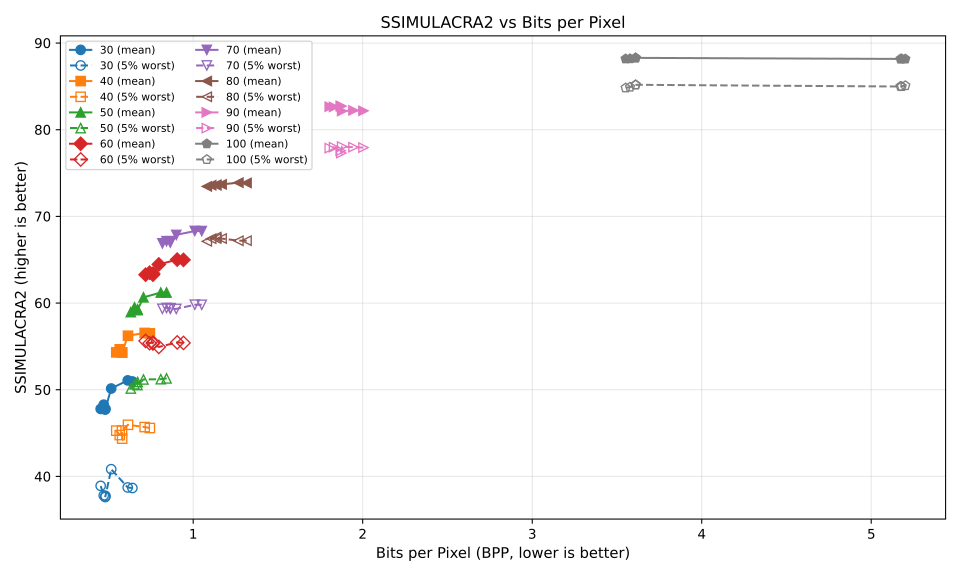
- SSIMULACRA2 vs BPP
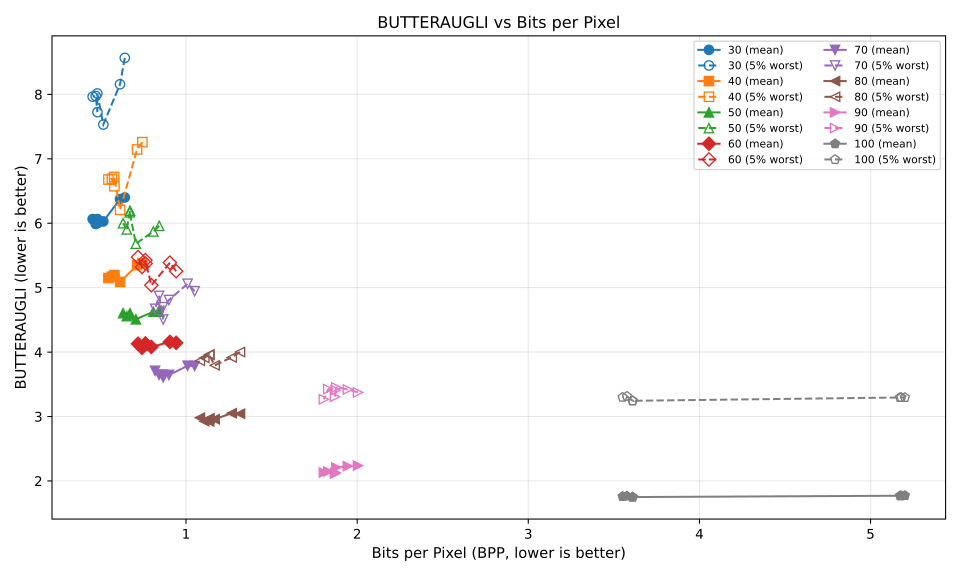
- BUTTERAUGLI vs BPP
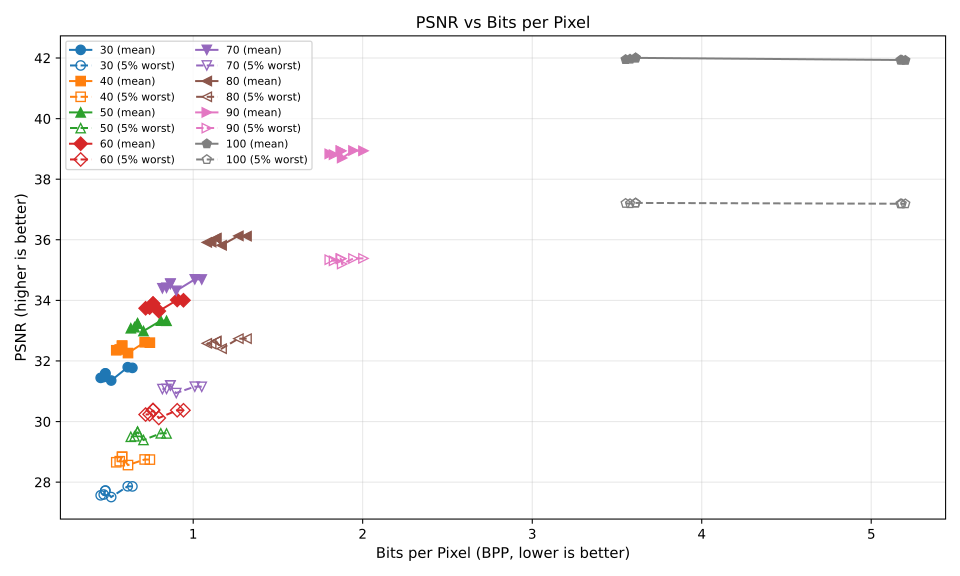
- PSNR vs BPP
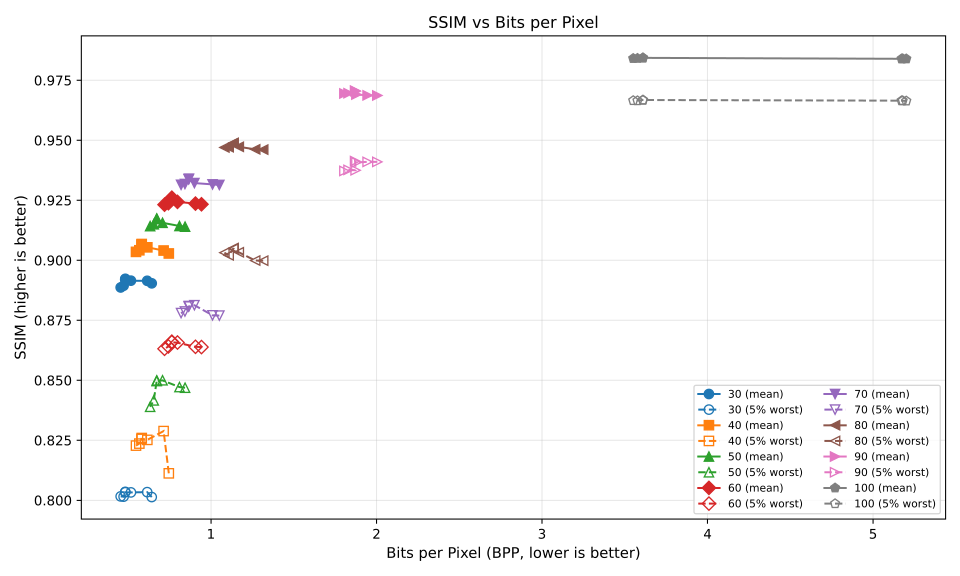
- SSIM vs BPP
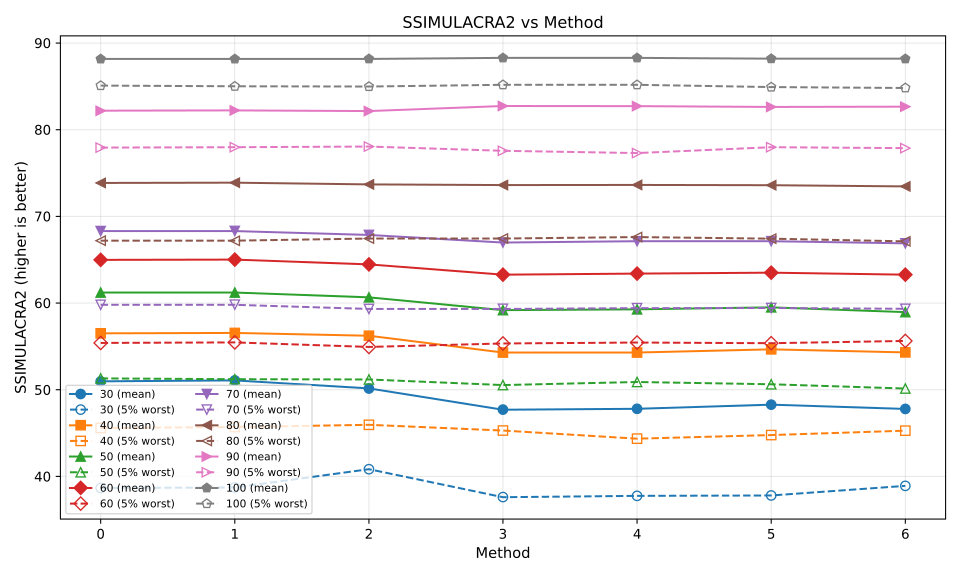
- SSIMULACRA2 vs Method
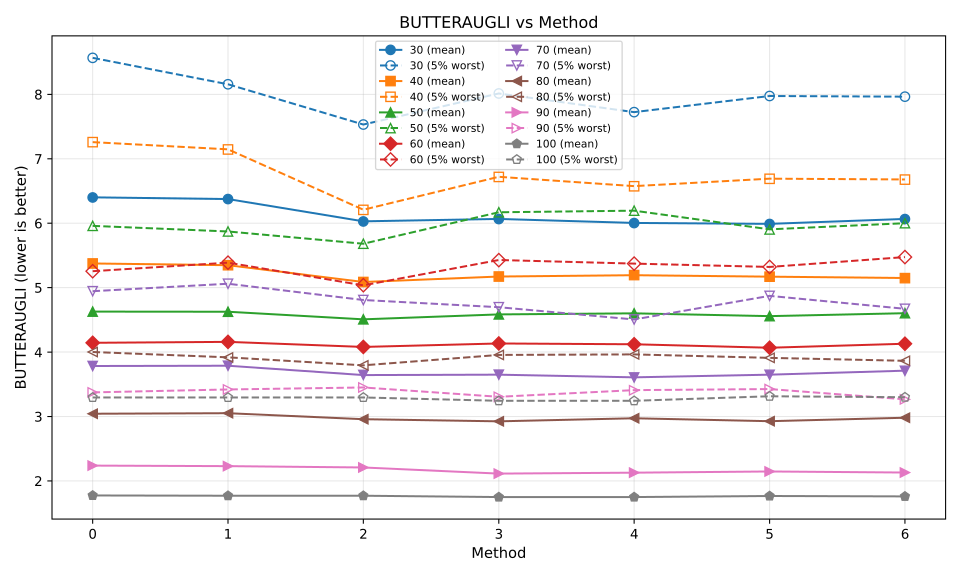
- BUTTERAUGLI vs Method
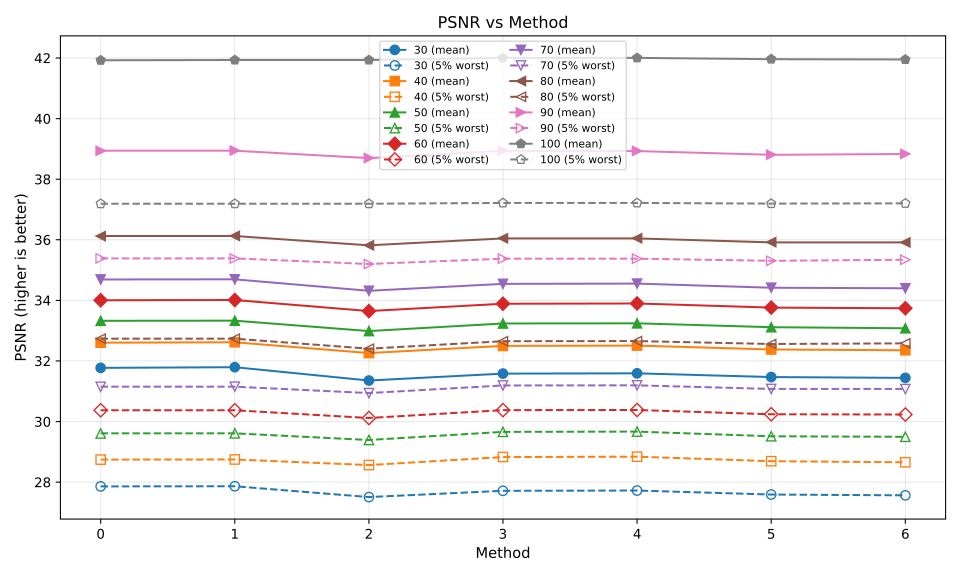
- PSNR vs Method
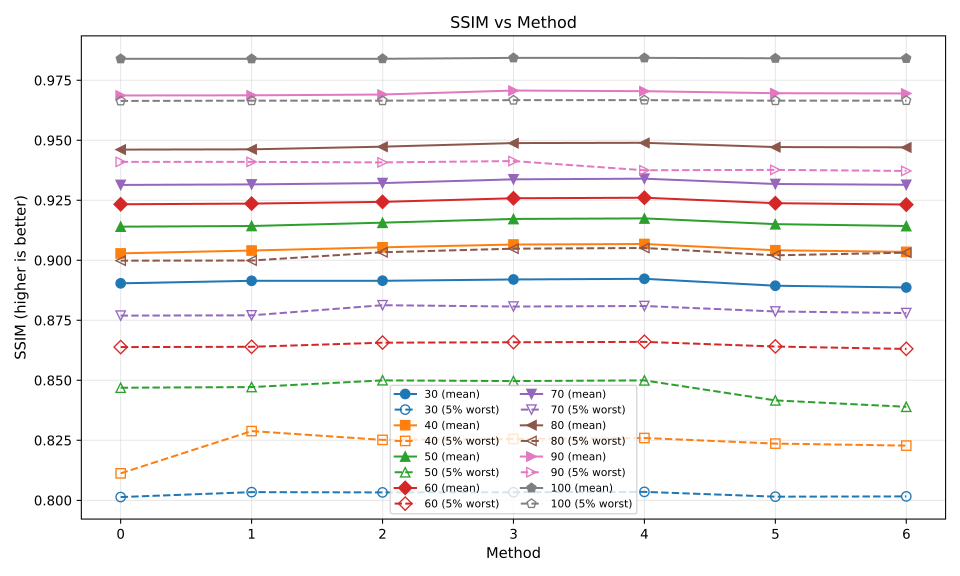
- SSIM vs Method
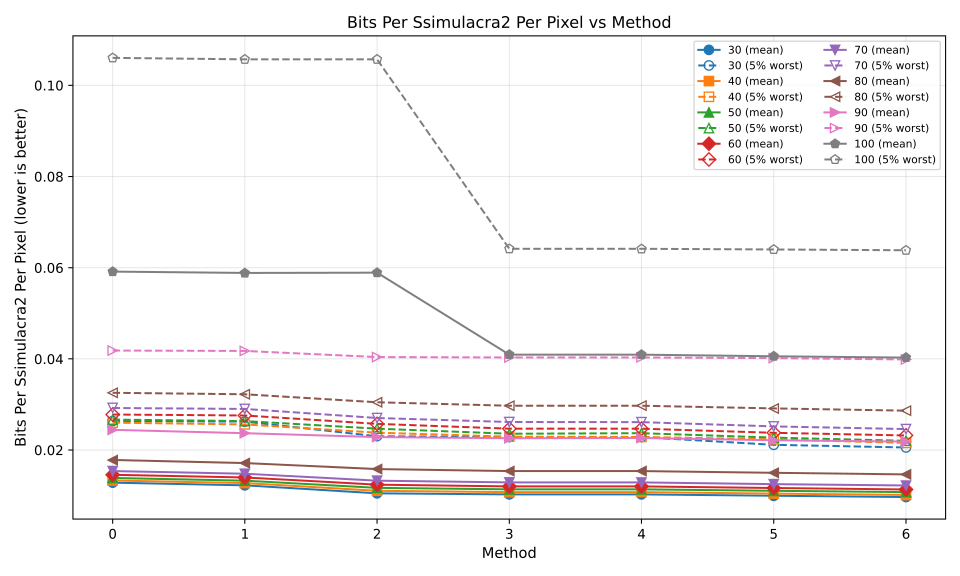
- BITS PER SSIMULACRA2 PER PIXEL vs Method
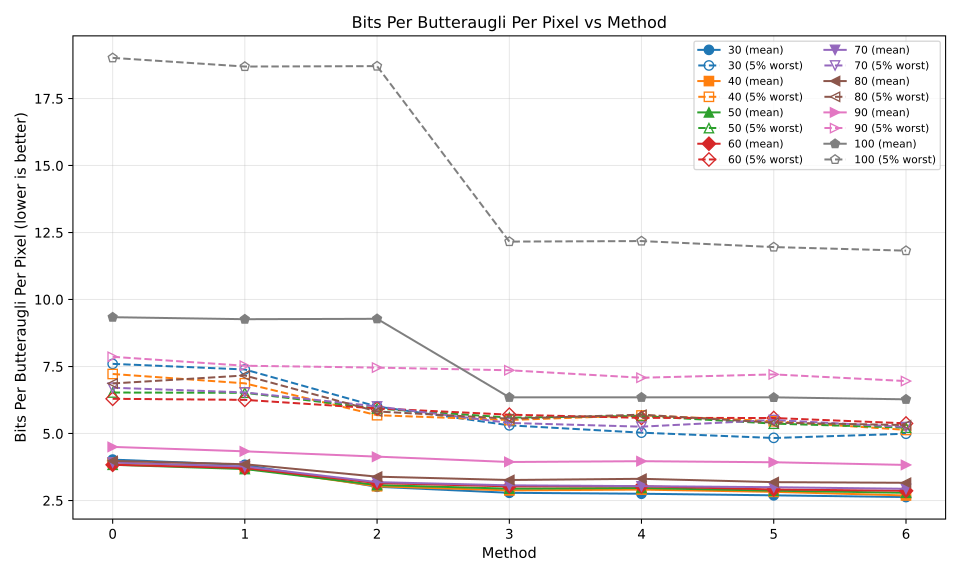
- BITS PER BUTTERAUGLI PER PIXEL vs Method
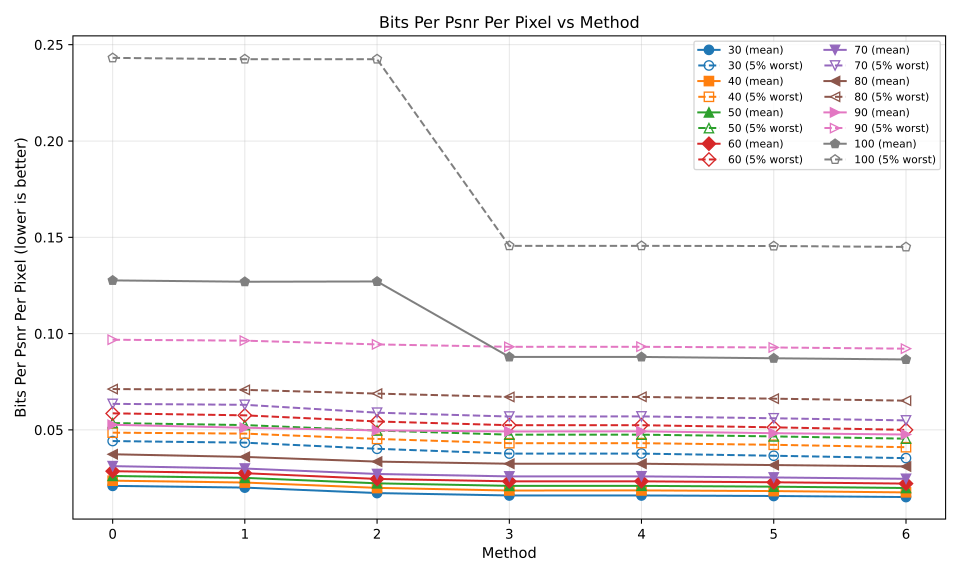
- BITS PER PSNR PER PIXEL vs Method
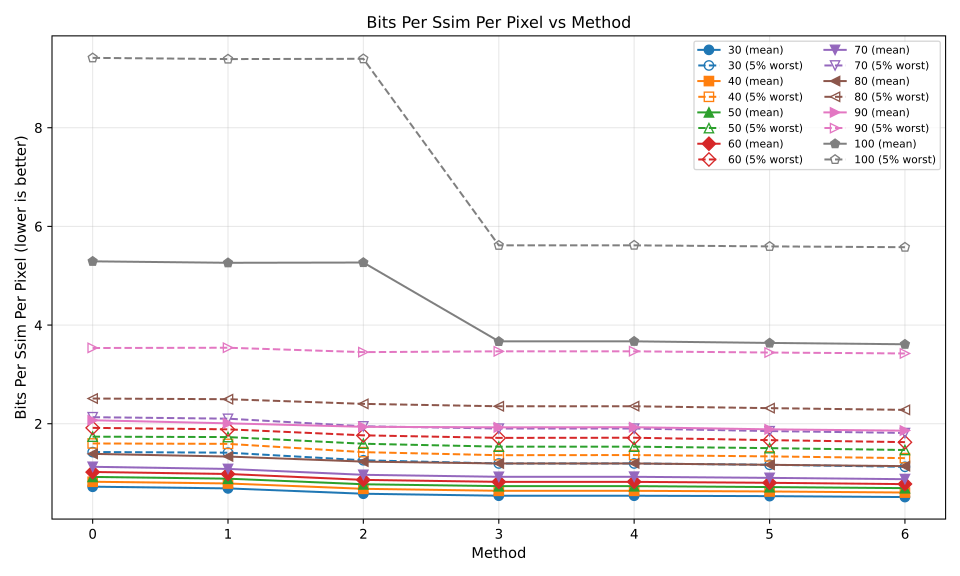
- BITS PER SSIM PER PIXEL vs Method
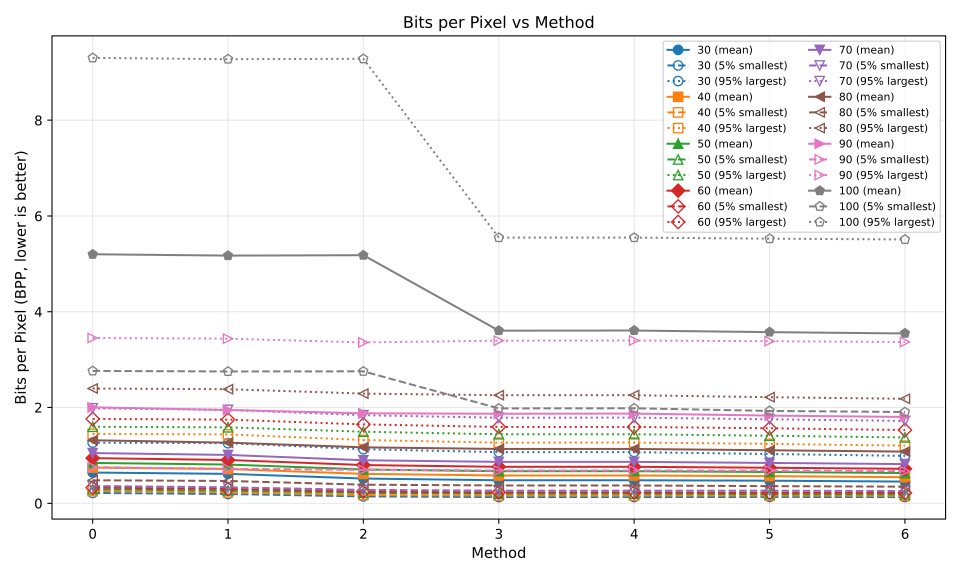
- BPP vs Method
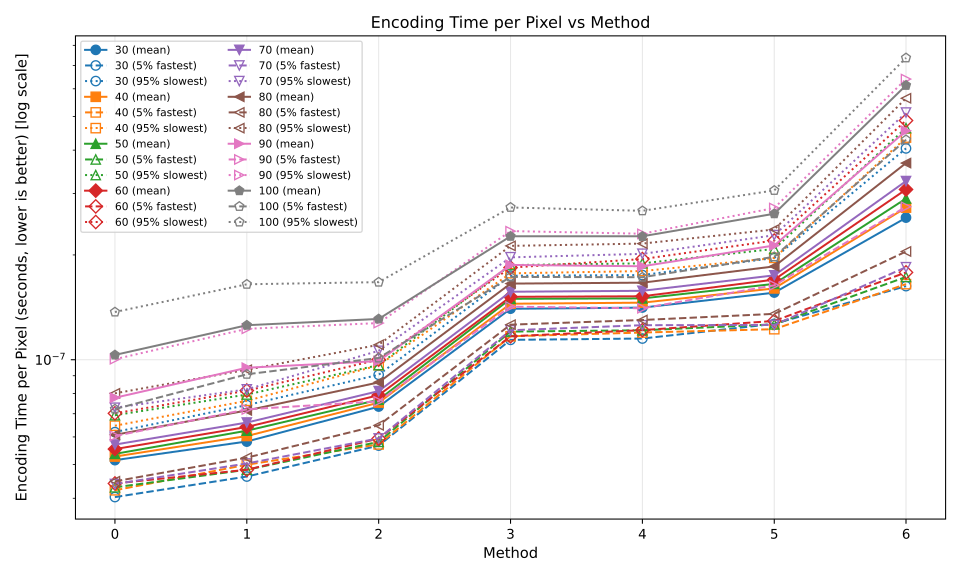
- ENCODING TIME PER PIXEL vs Method
- Visual Comparison
Data Downloads
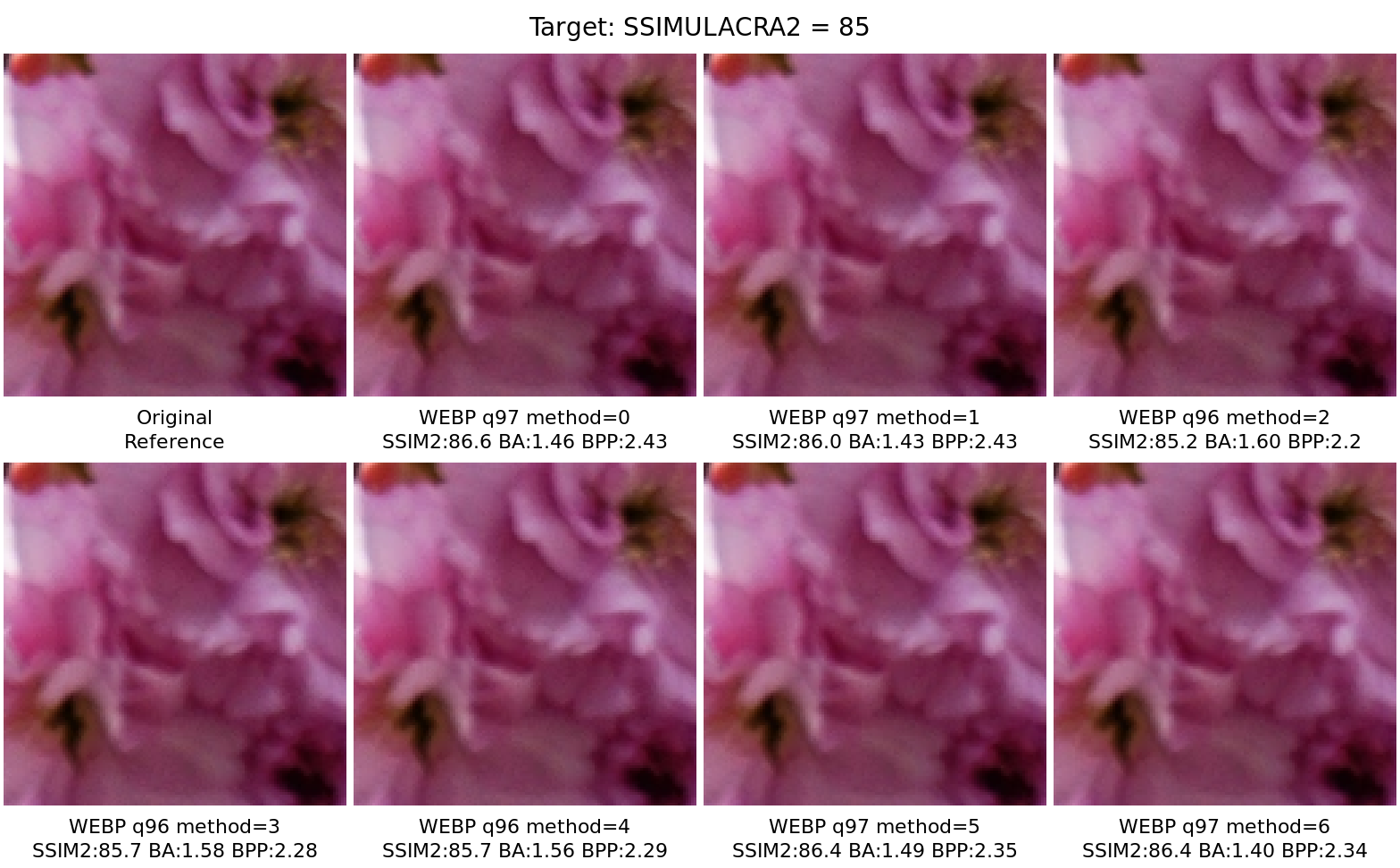
Visual Comparison
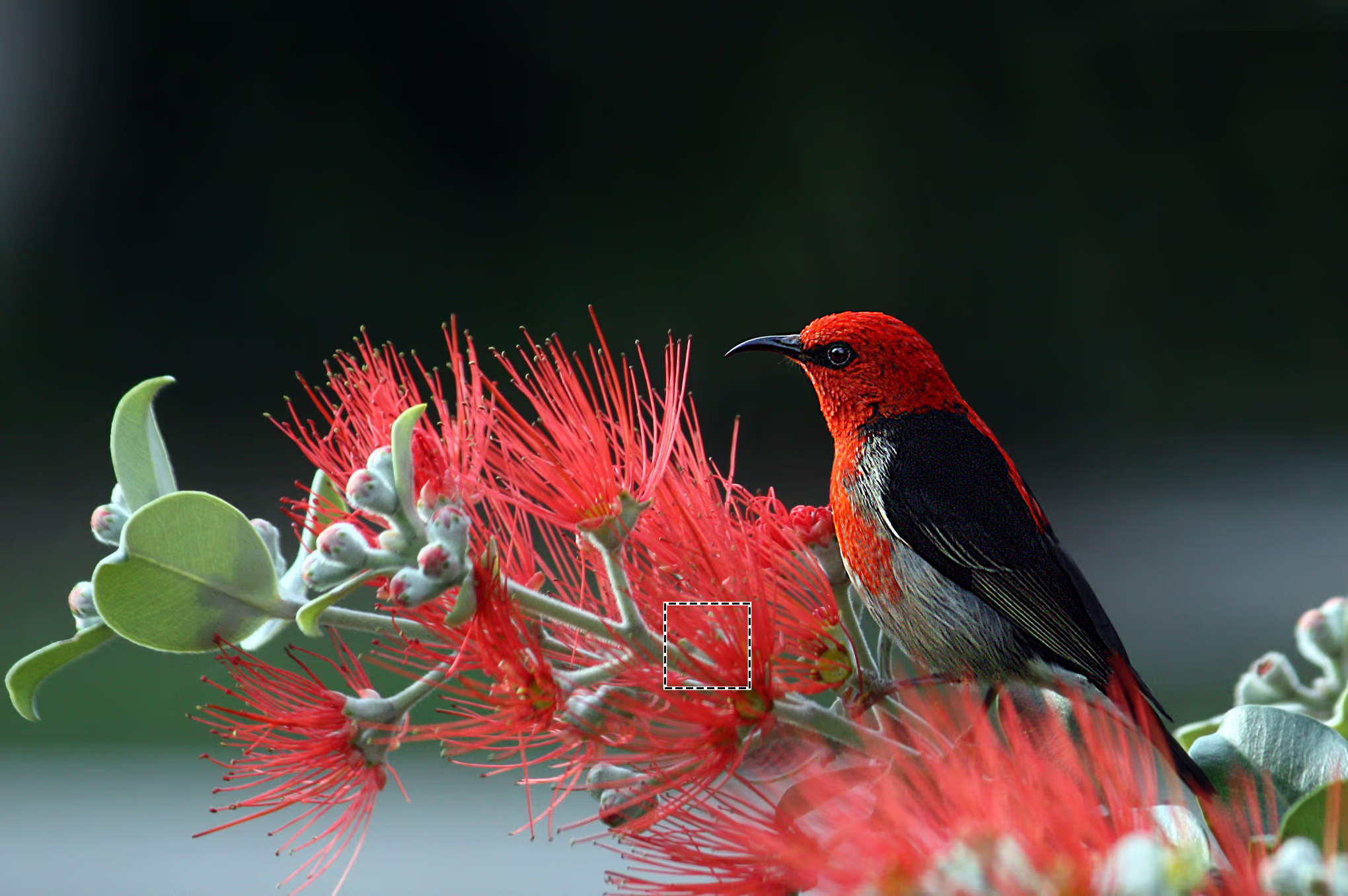
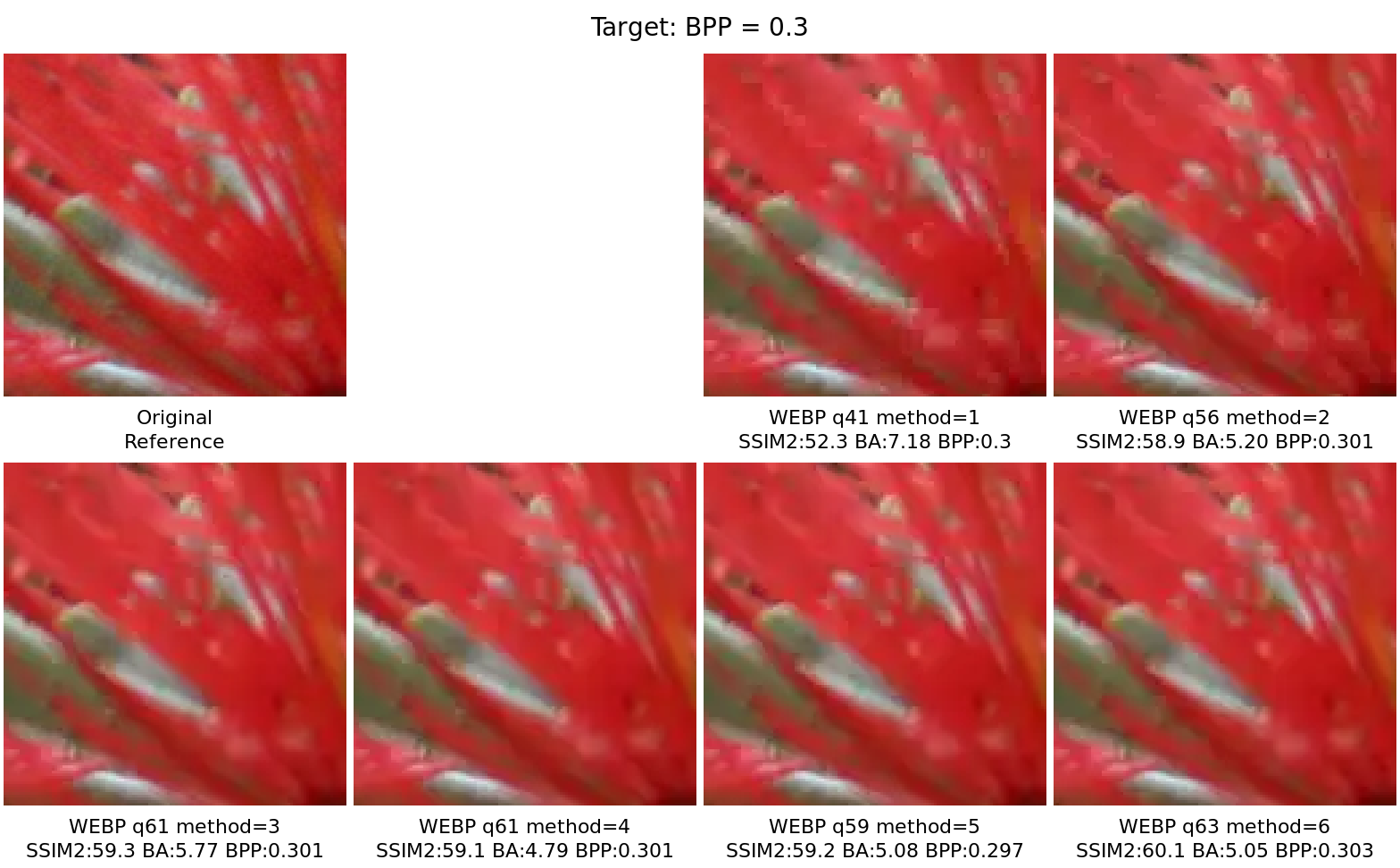
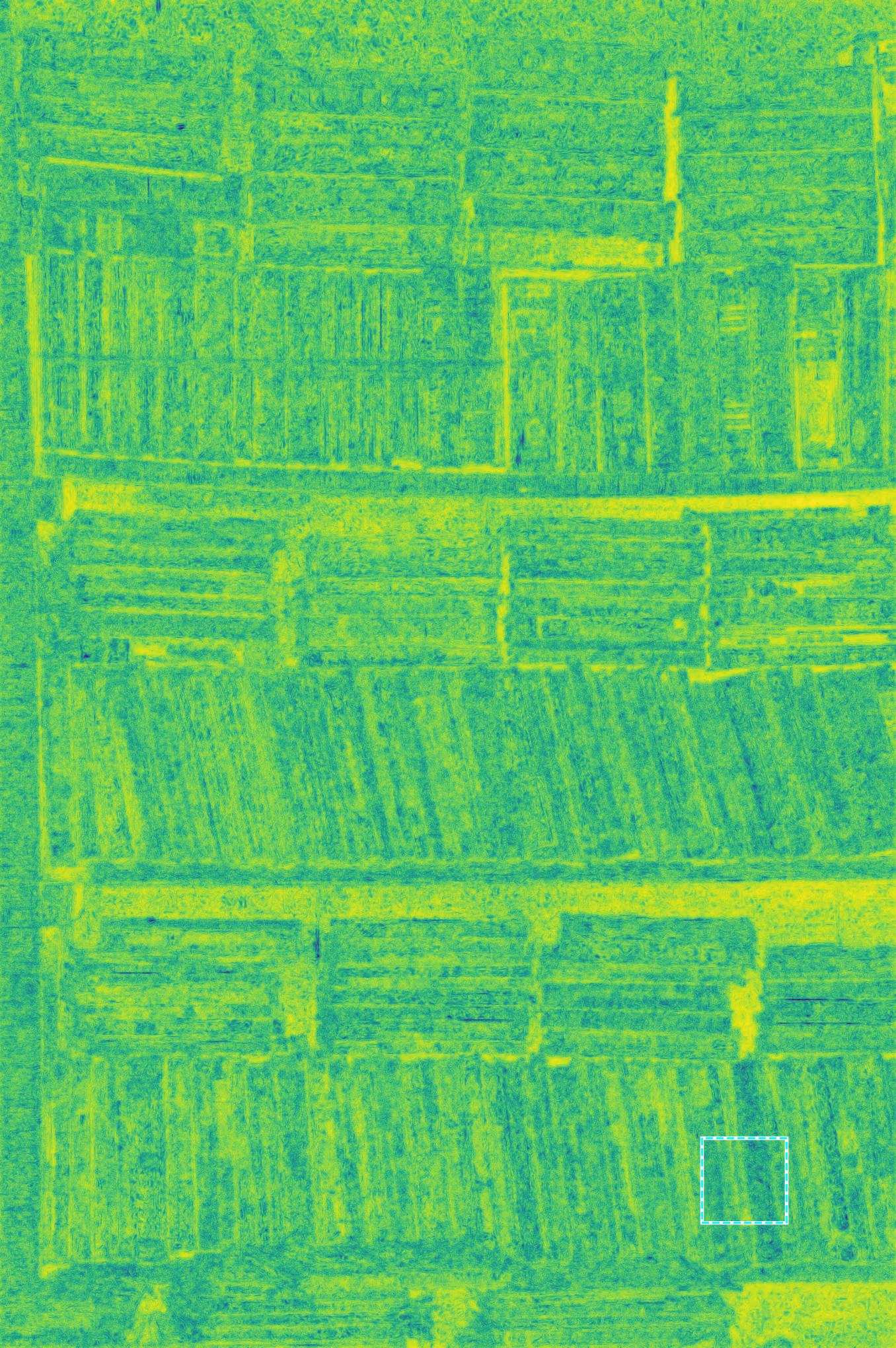
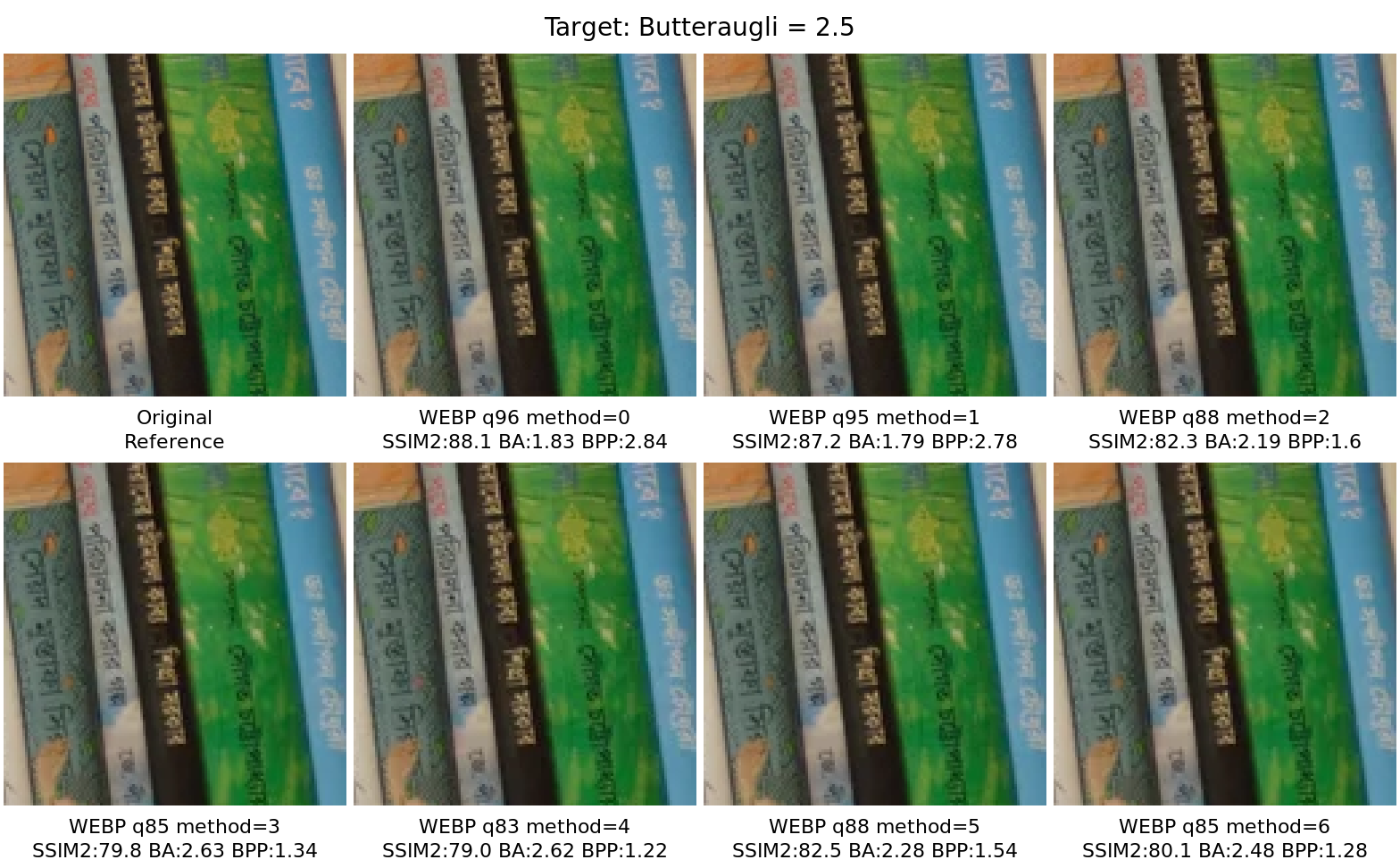
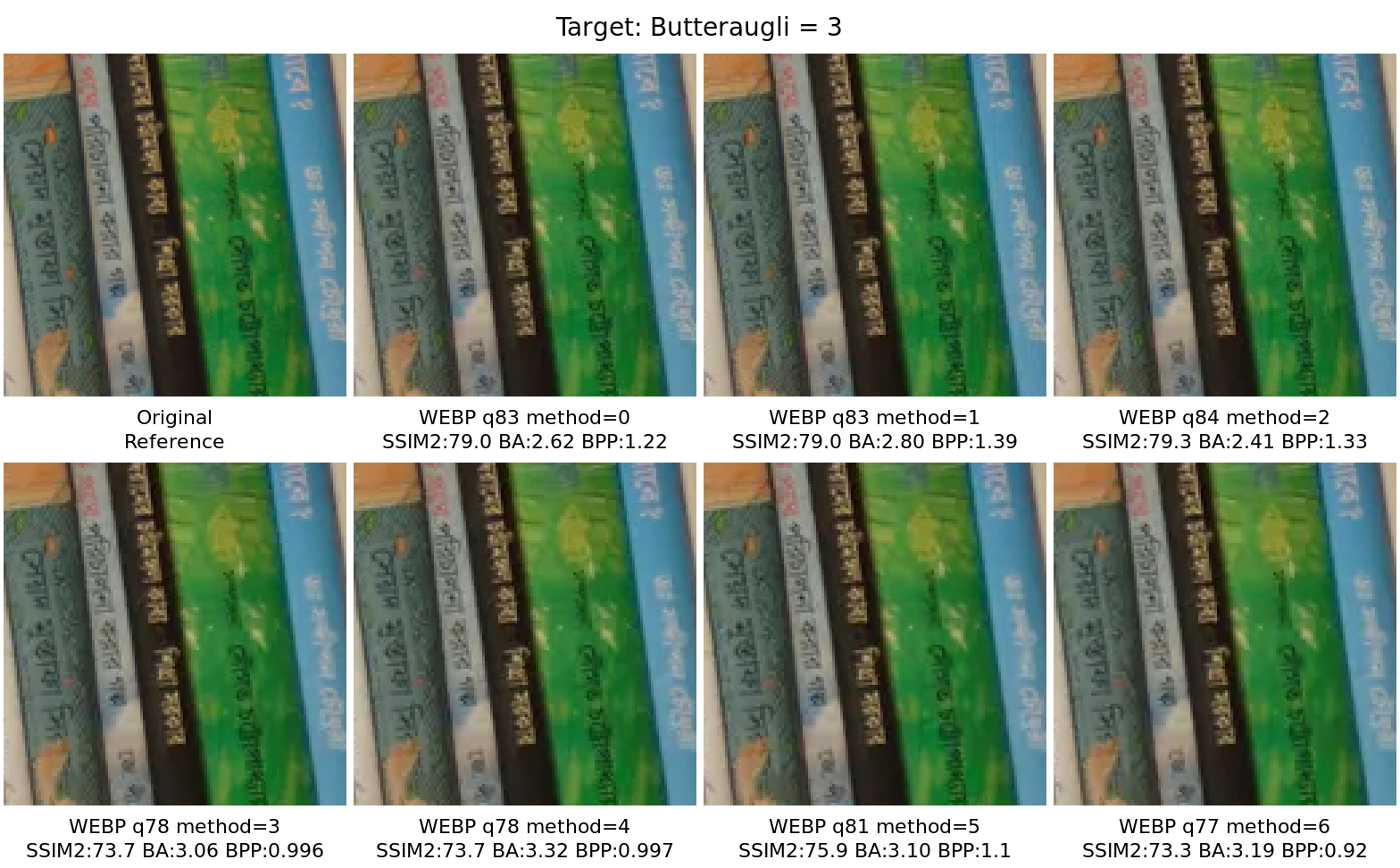
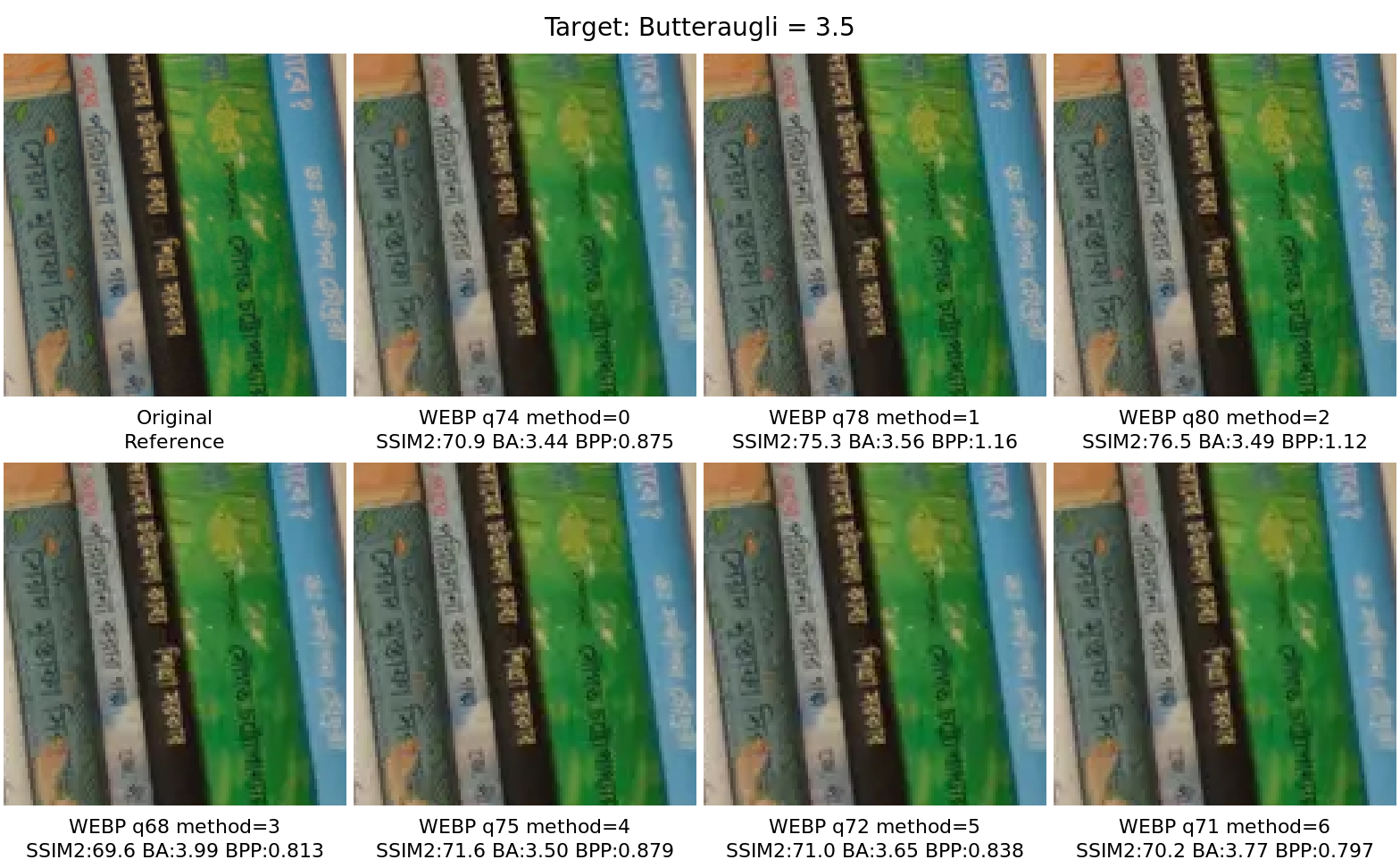
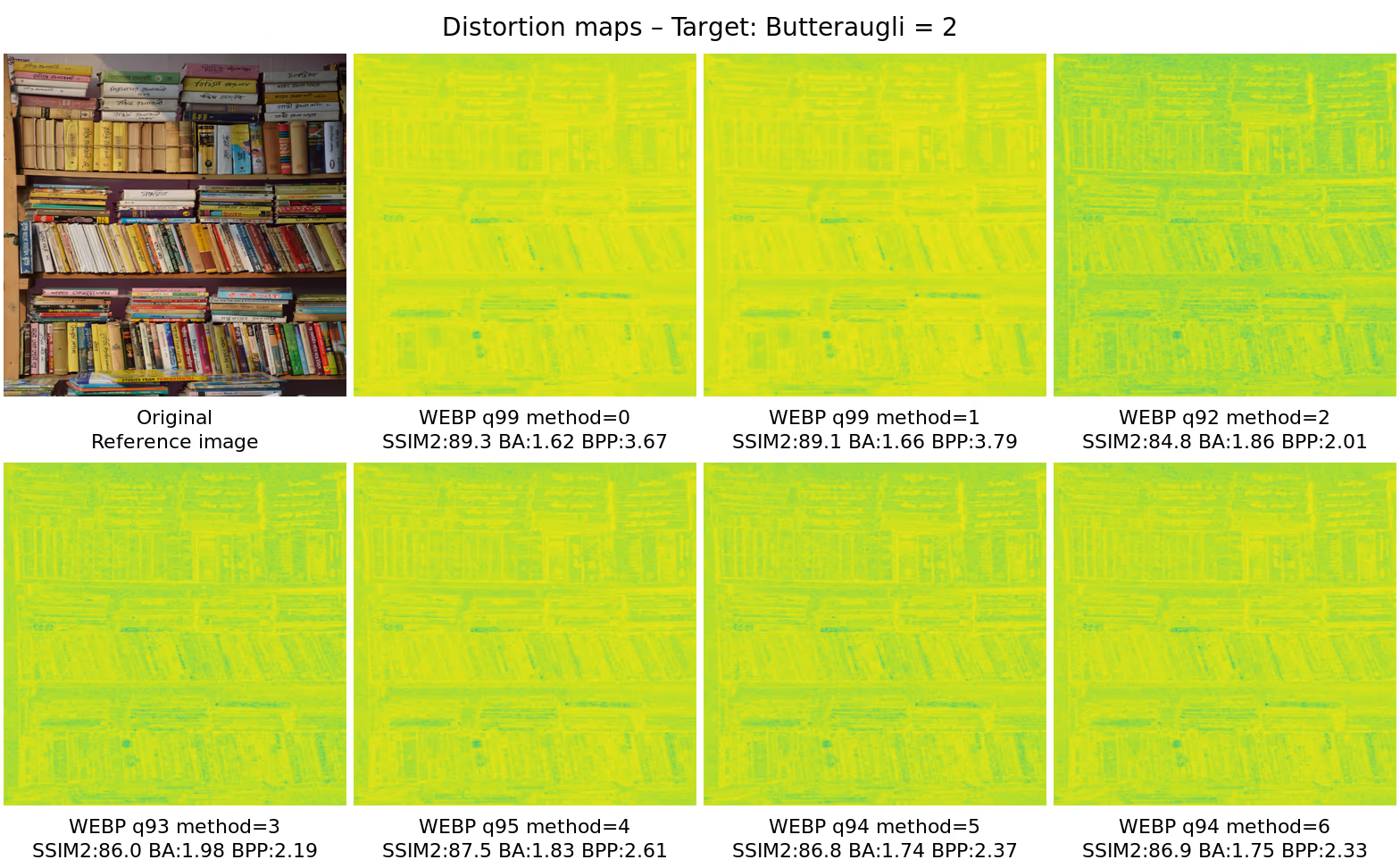
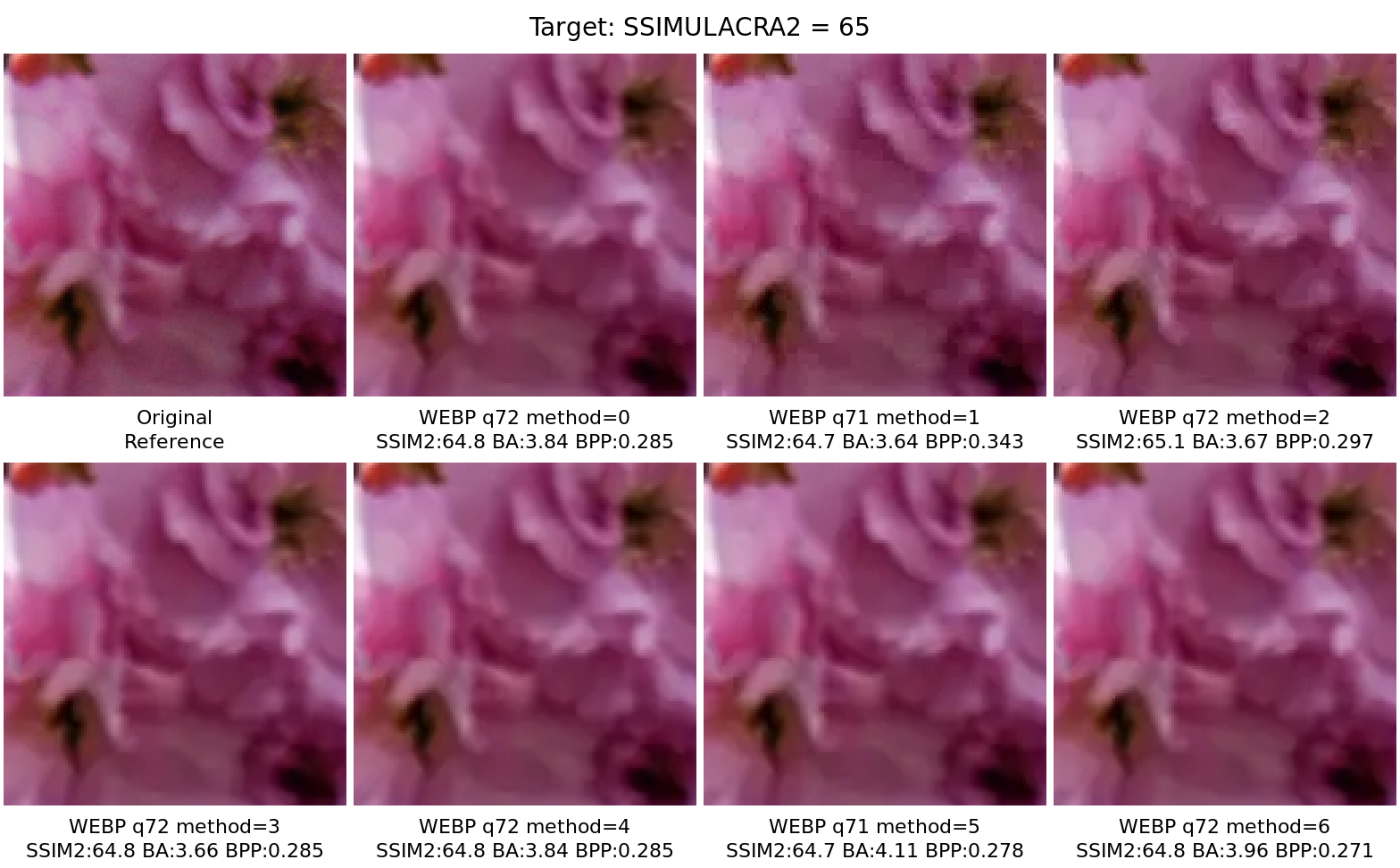
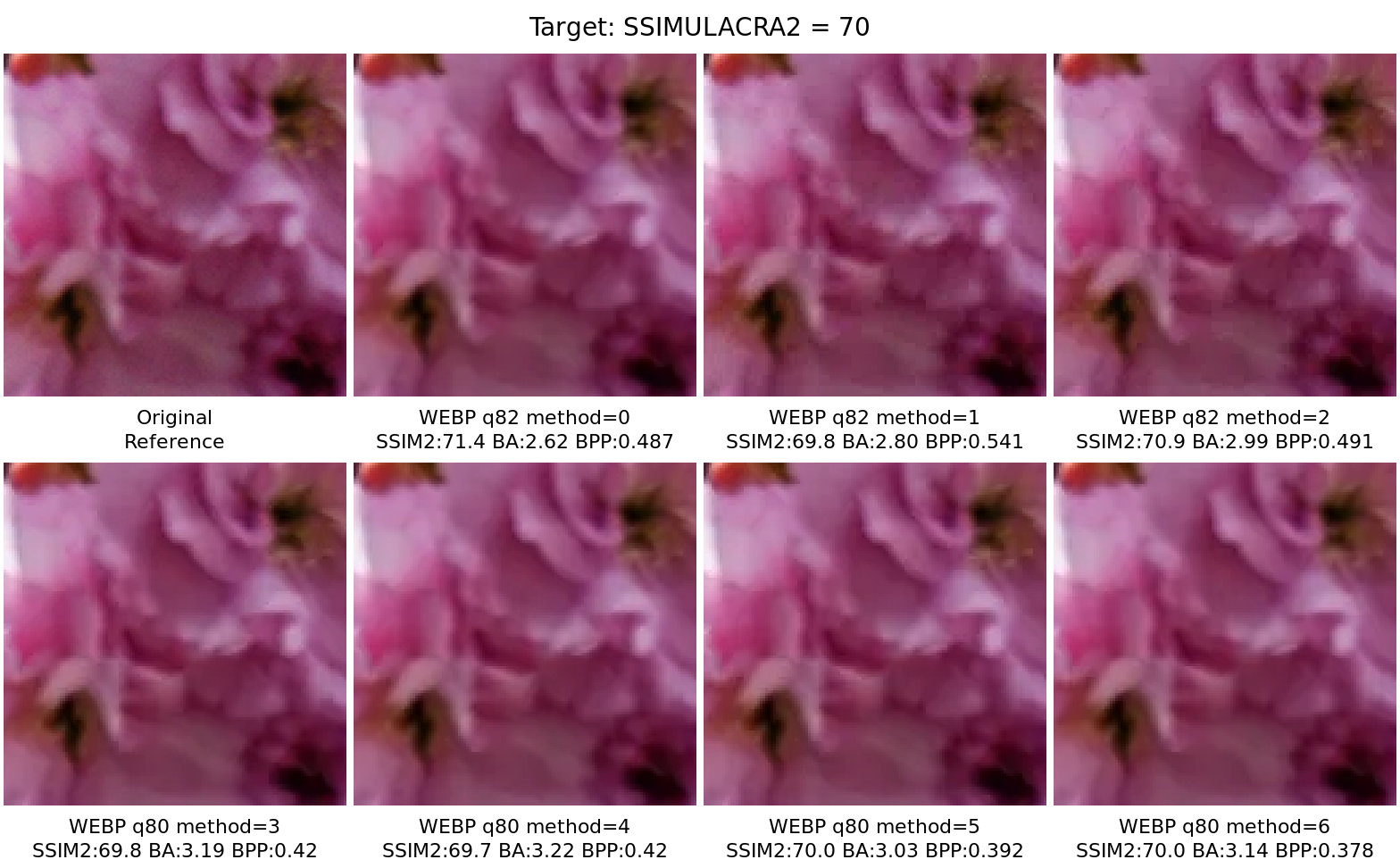
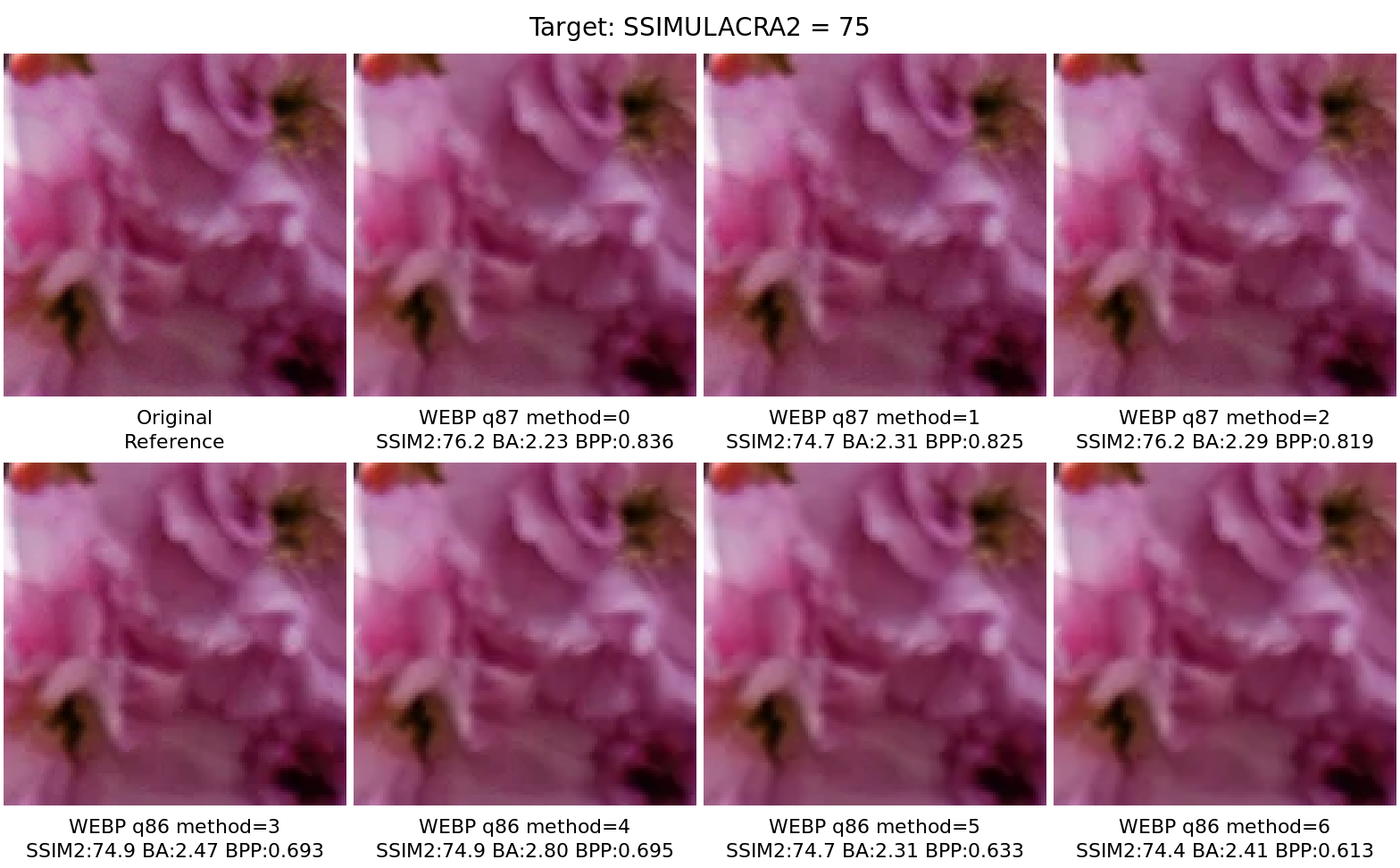
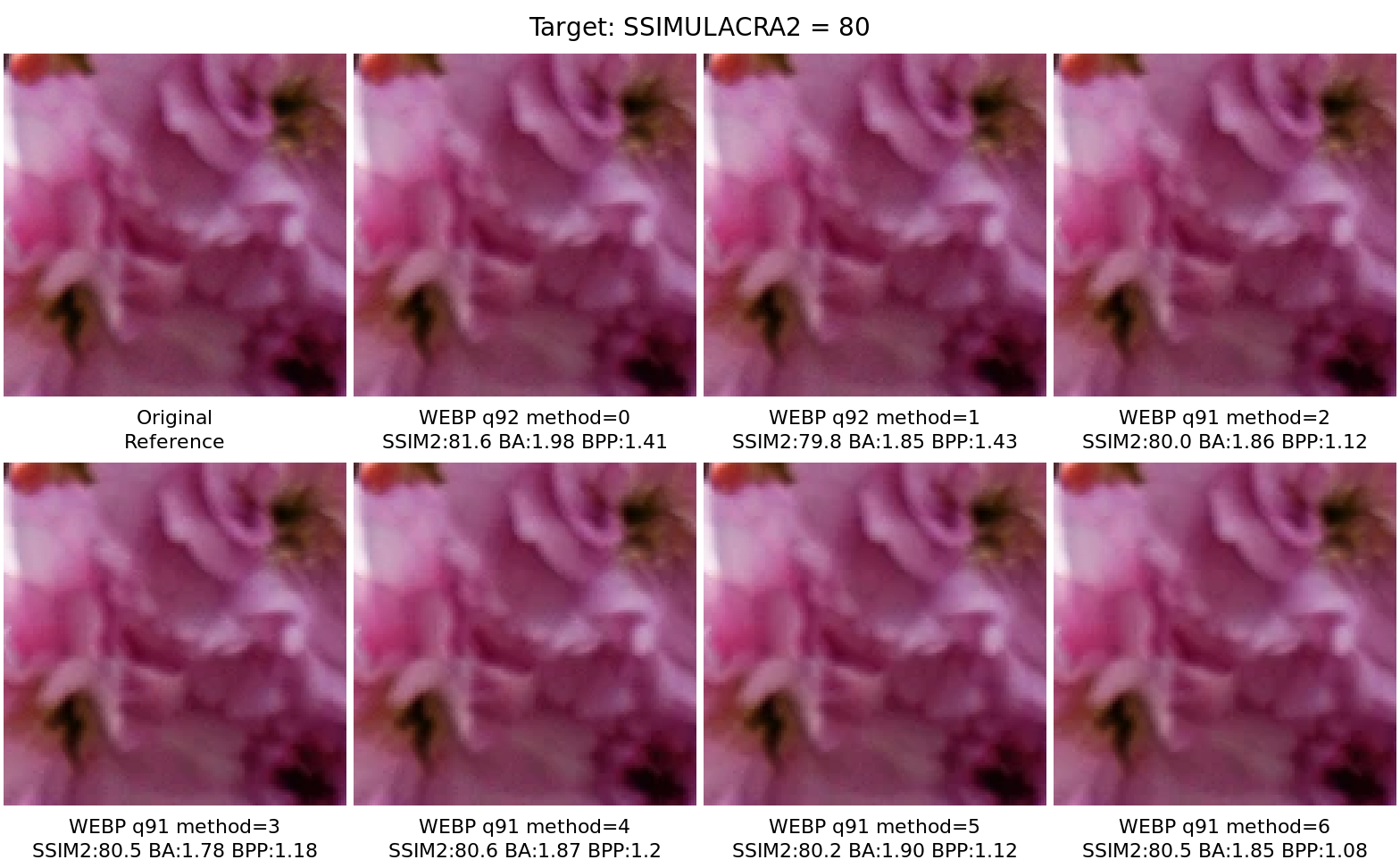
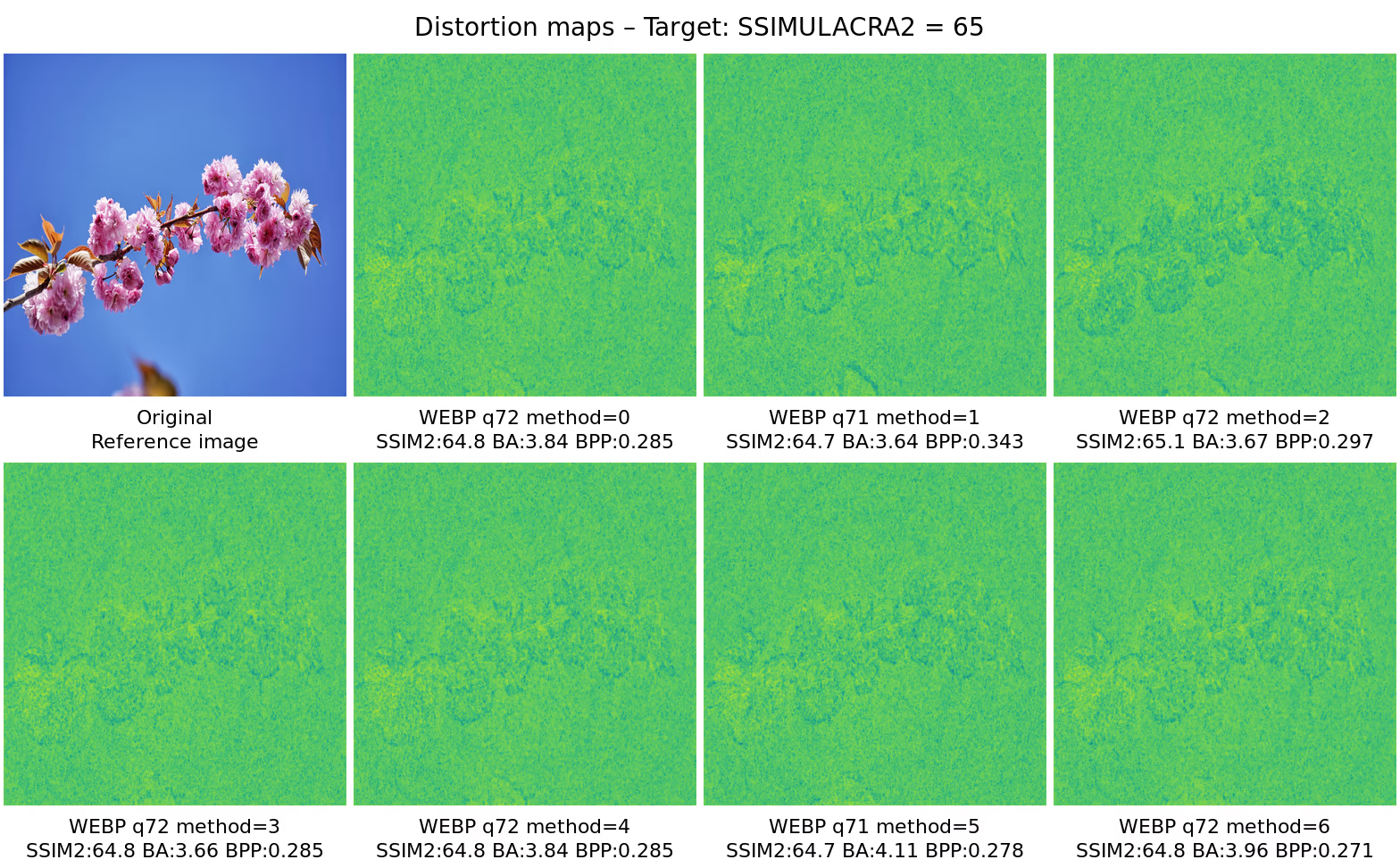
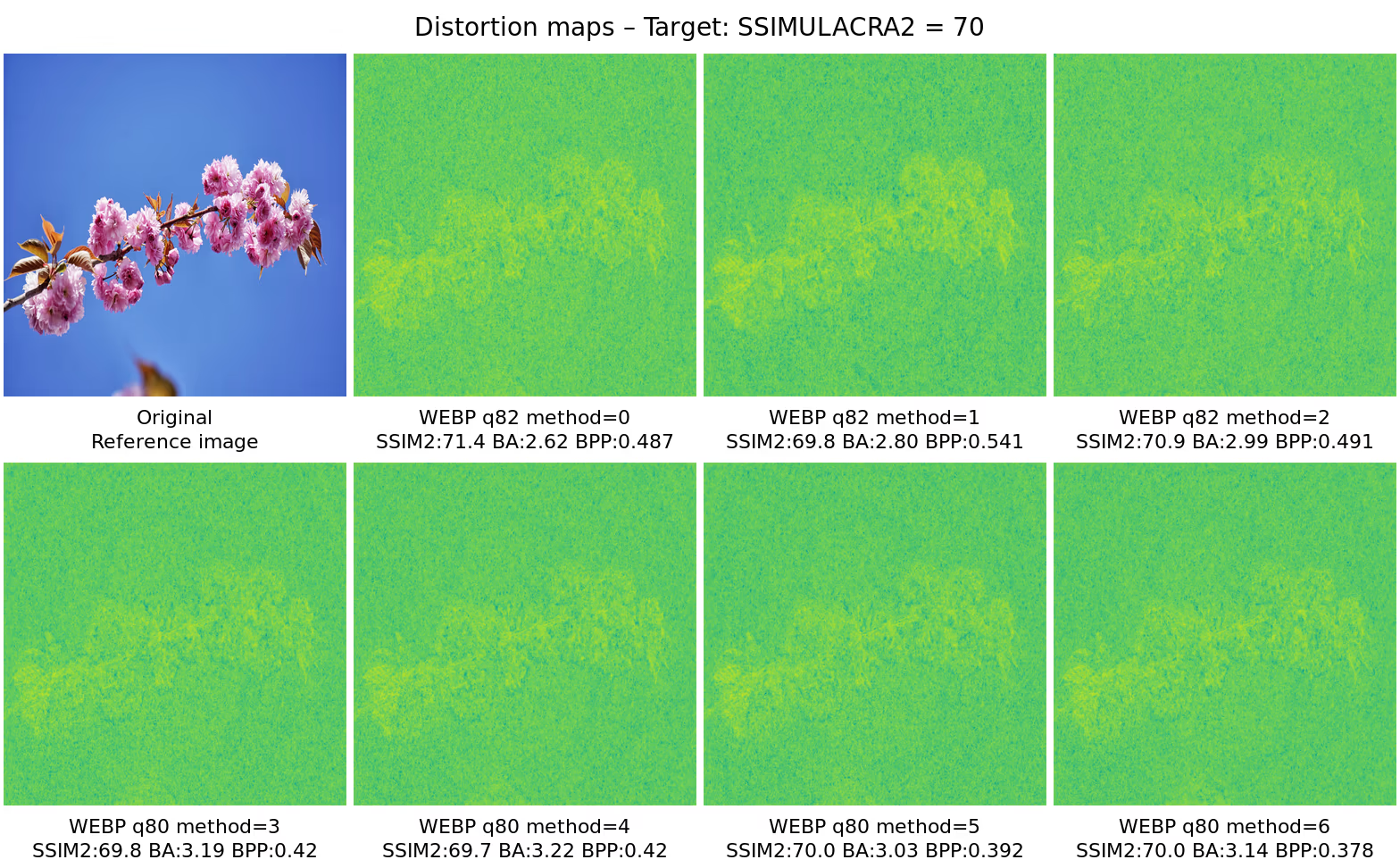
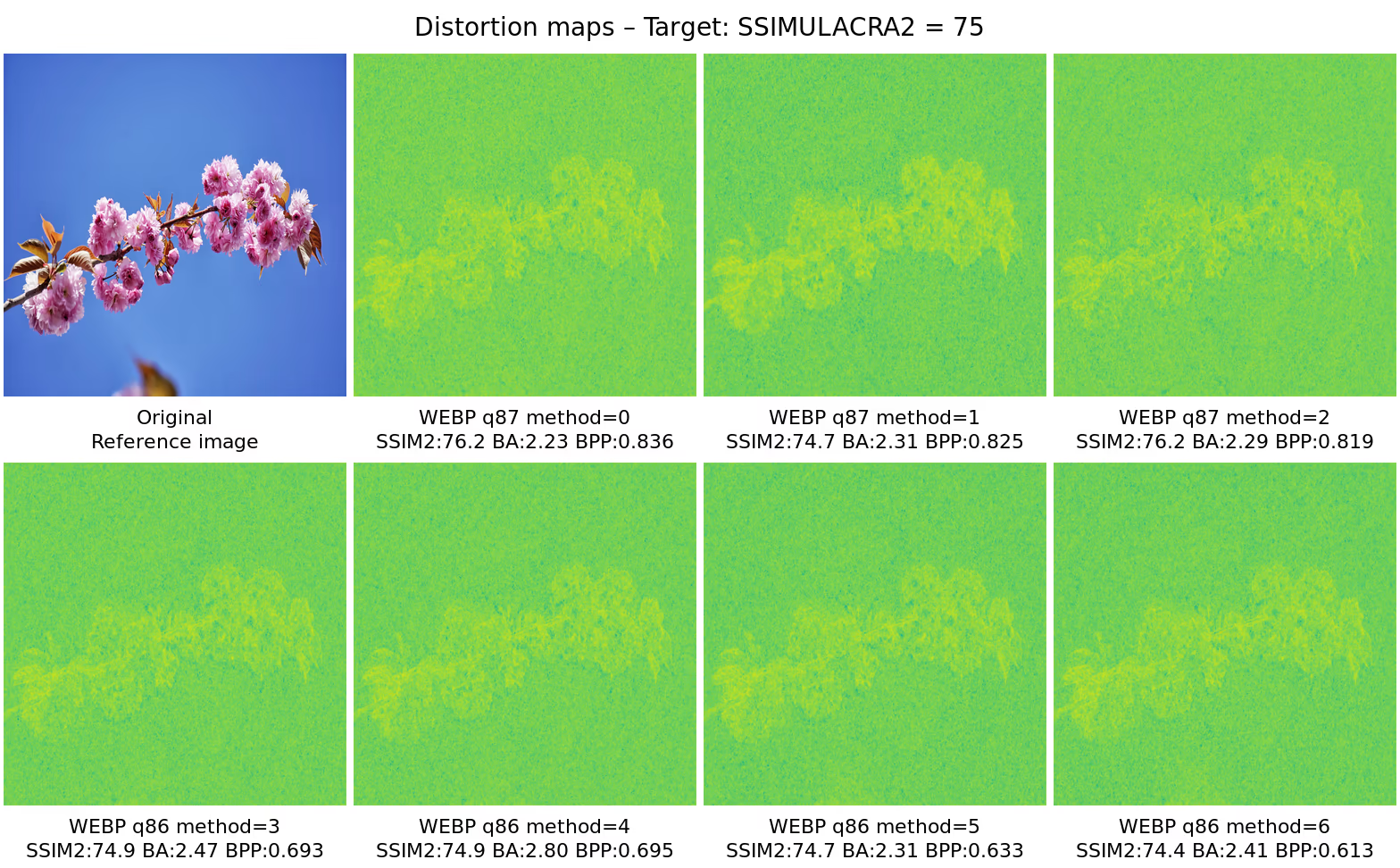
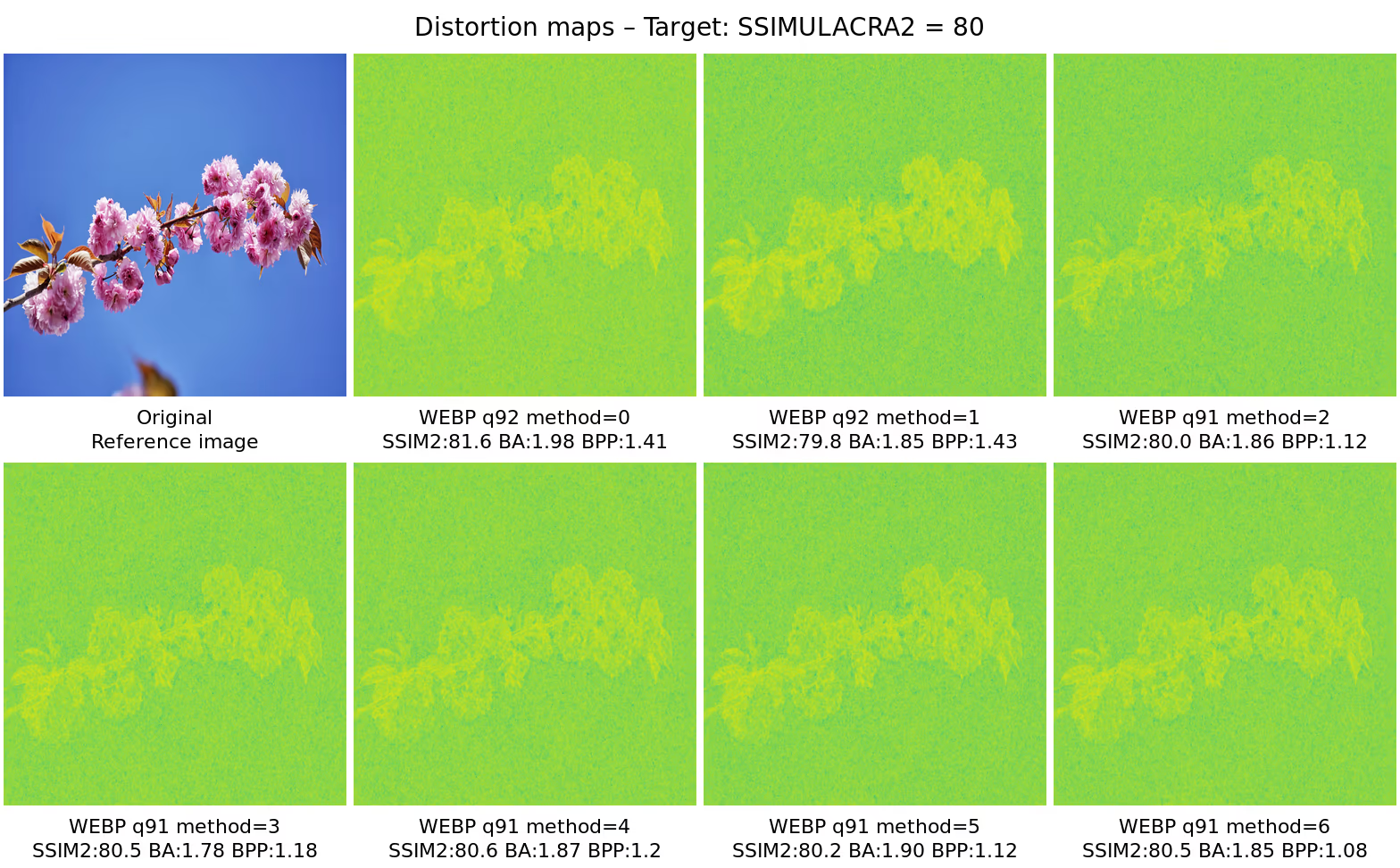
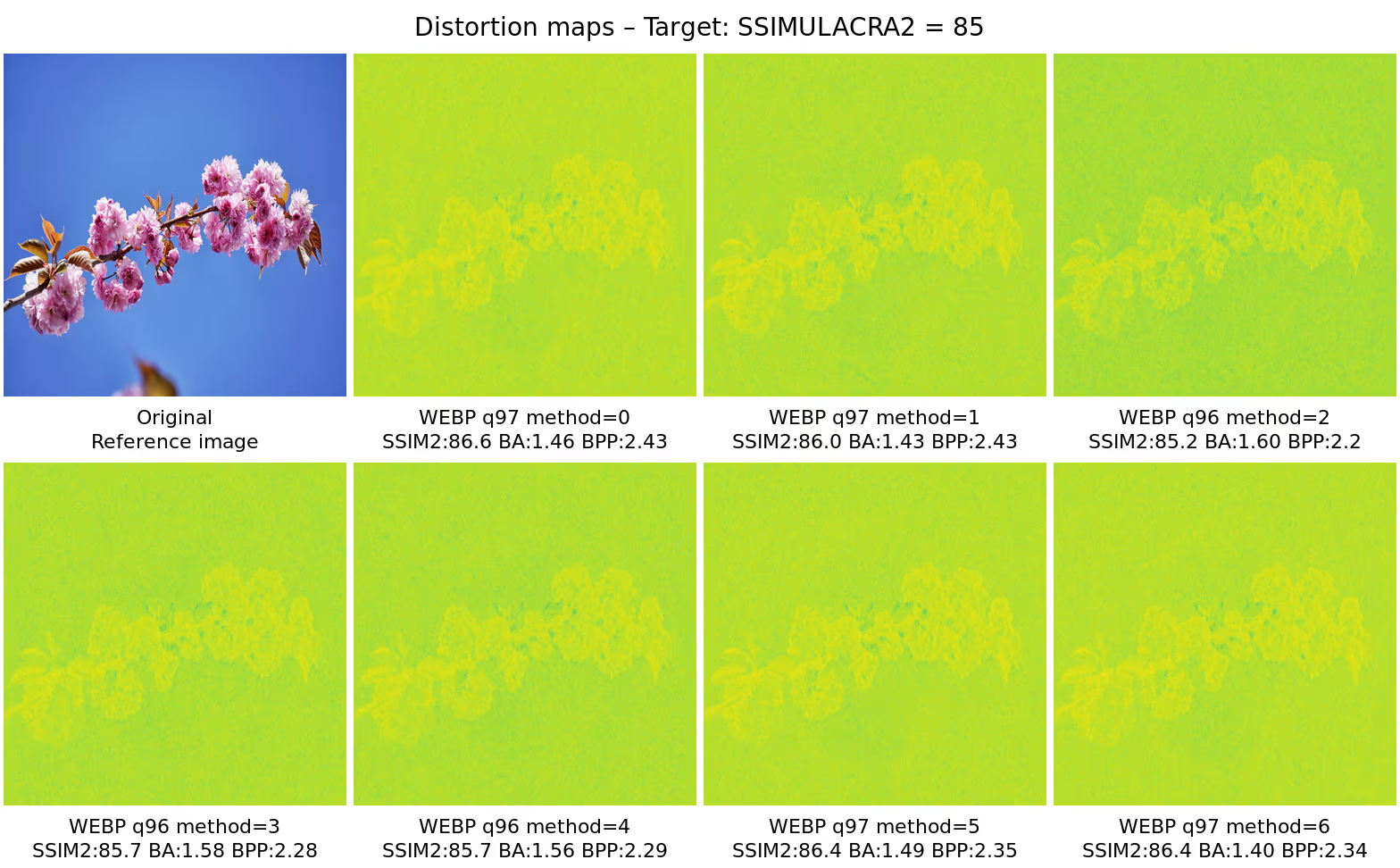
Side-by-side comparison of encoding artifacts on the most representative image fragments, selected automatically from the dataset using Butteraugli spatial distortion analysis. Identifies the image and fragment where the choice of encoding parameters has the greatest anisotropic impact on quality. One fragment is selected per target metric group and shared across all target values within that group for direct comparability. The dashed rectangle marks the fragment used for the comparisons below. Per-pixel anisotropic variance of Butteraugli distortion — bright regions show where quality varies most across tile-parameter values. The variance maps for each target value are averaged to select one fragment for the entire group. Nearest-neighbour 3× zoom of the selected fragment, comparing original against each encoding variant. Images are served losslessly to preserve pixel fidelity. Click any image to open it in the lightbox viewer. Per-variant Butteraugli distortion maps shown as viridis heatmaps at uniform scale (darker = higher distortion). Reveals where each encoder concentrates its errors. The dashed rectangle marks the fragment used for the comparisons below. Per-pixel anisotropic variance of Butteraugli distortion — bright regions show where quality varies most across tile-parameter values. The variance maps for each target value are averaged to select one fragment for the entire group. Nearest-neighbour 3× zoom of the selected fragment, comparing original against each encoding variant. Images are served losslessly to preserve pixel fidelity. Click any image to open it in the lightbox viewer. Per-variant Butteraugli distortion maps shown as viridis heatmaps at uniform scale (darker = higher distortion). Reveals where each encoder concentrates its errors. The dashed rectangle marks the fragment used for the comparisons below. Per-pixel anisotropic variance of Butteraugli distortion — bright regions show where quality varies most across tile-parameter values. The variance maps for each target value are averaged to select one fragment for the entire group. Nearest-neighbour 3× zoom of the selected fragment, comparing original against each encoding variant. Images are served losslessly to preserve pixel fidelity. Click any image to open it in the lightbox viewer. Per-variant Butteraugli distortion maps shown as viridis heatmaps at uniform scale (darker = higher distortion). Reveals where each encoder concentrates its errors.Anisotropic Variance Analysis
Matched Bits Per Pixel
Selected Image & Fragment Location
Anisotropic Distortion Map

Fragment Comparison
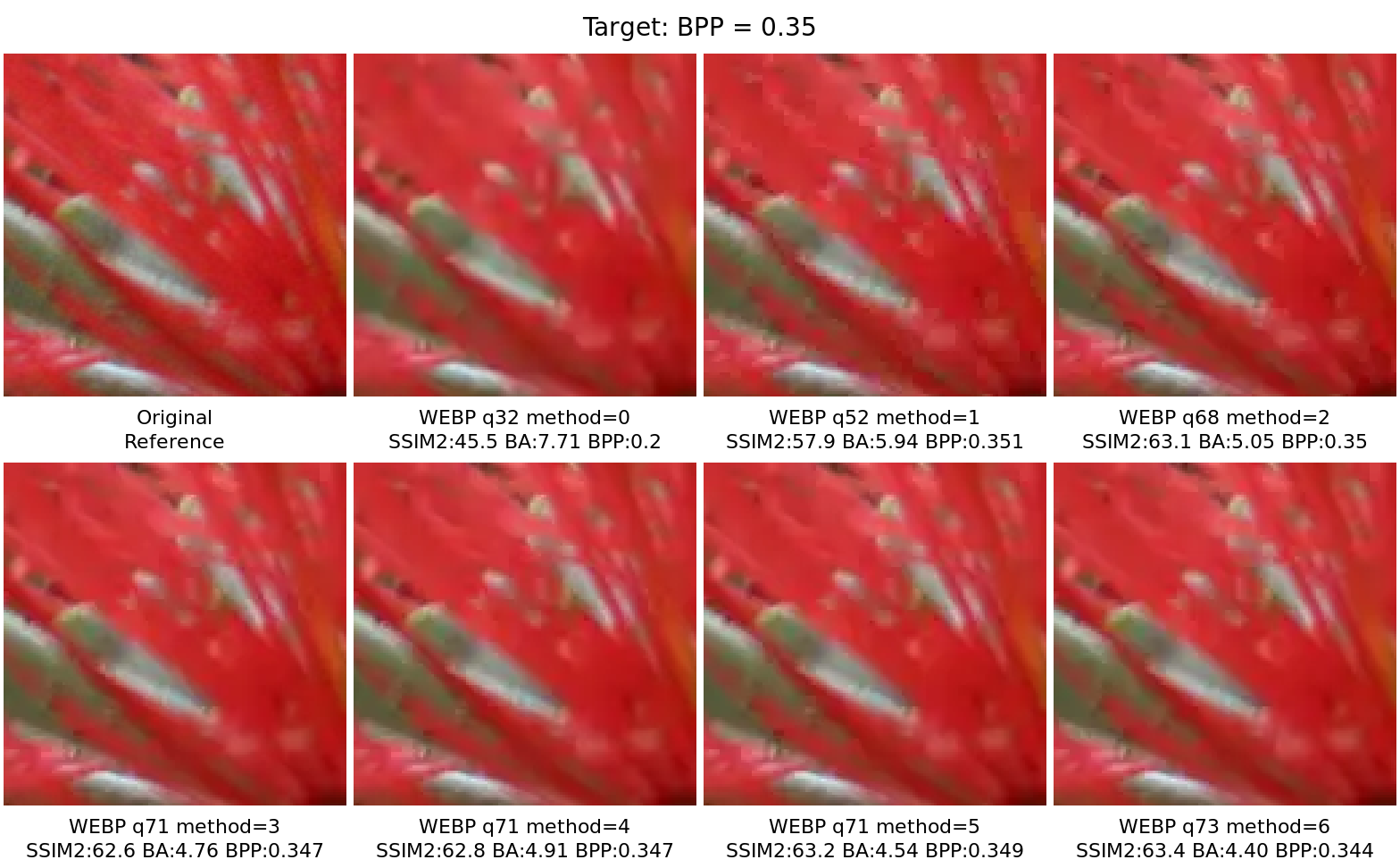
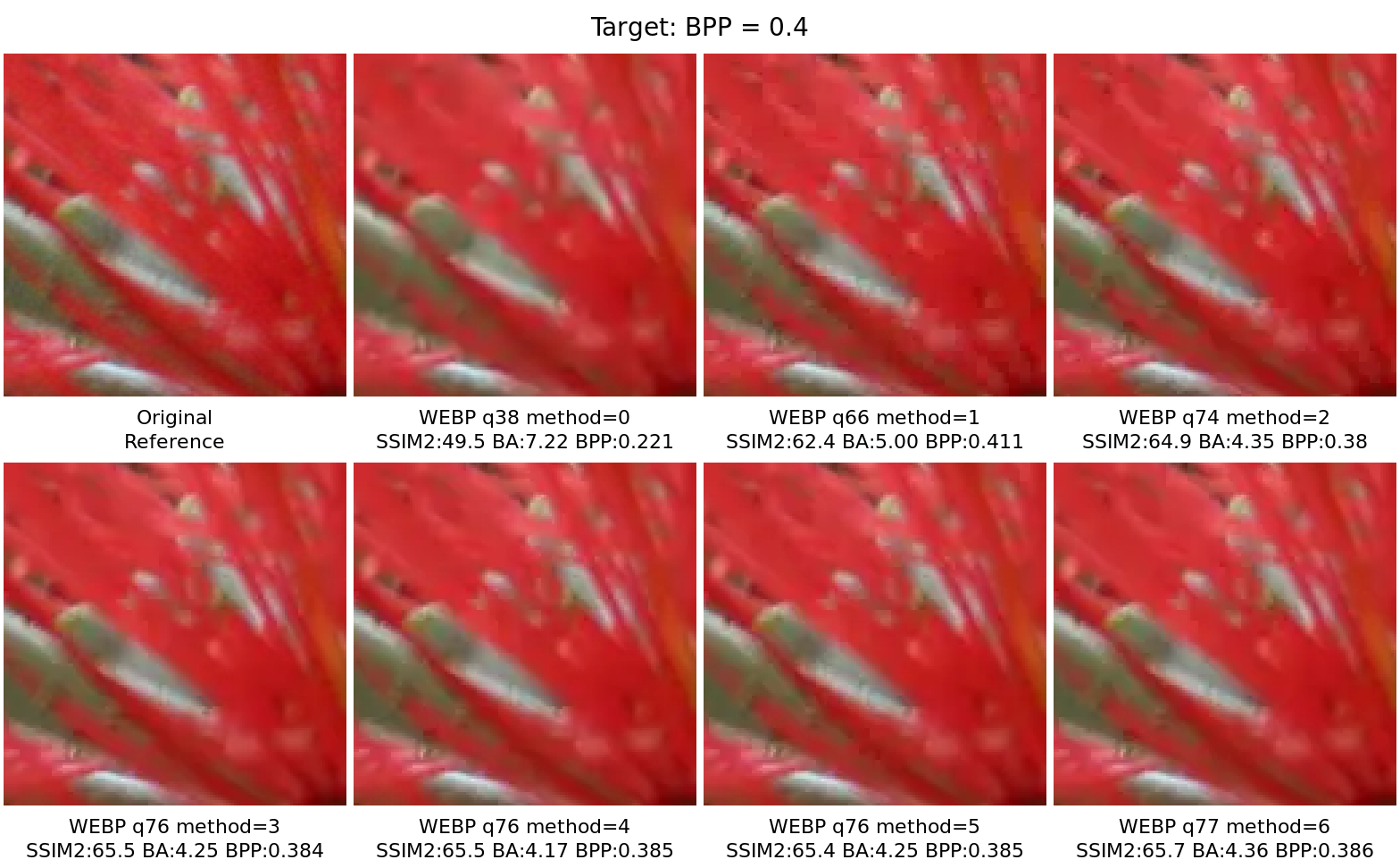
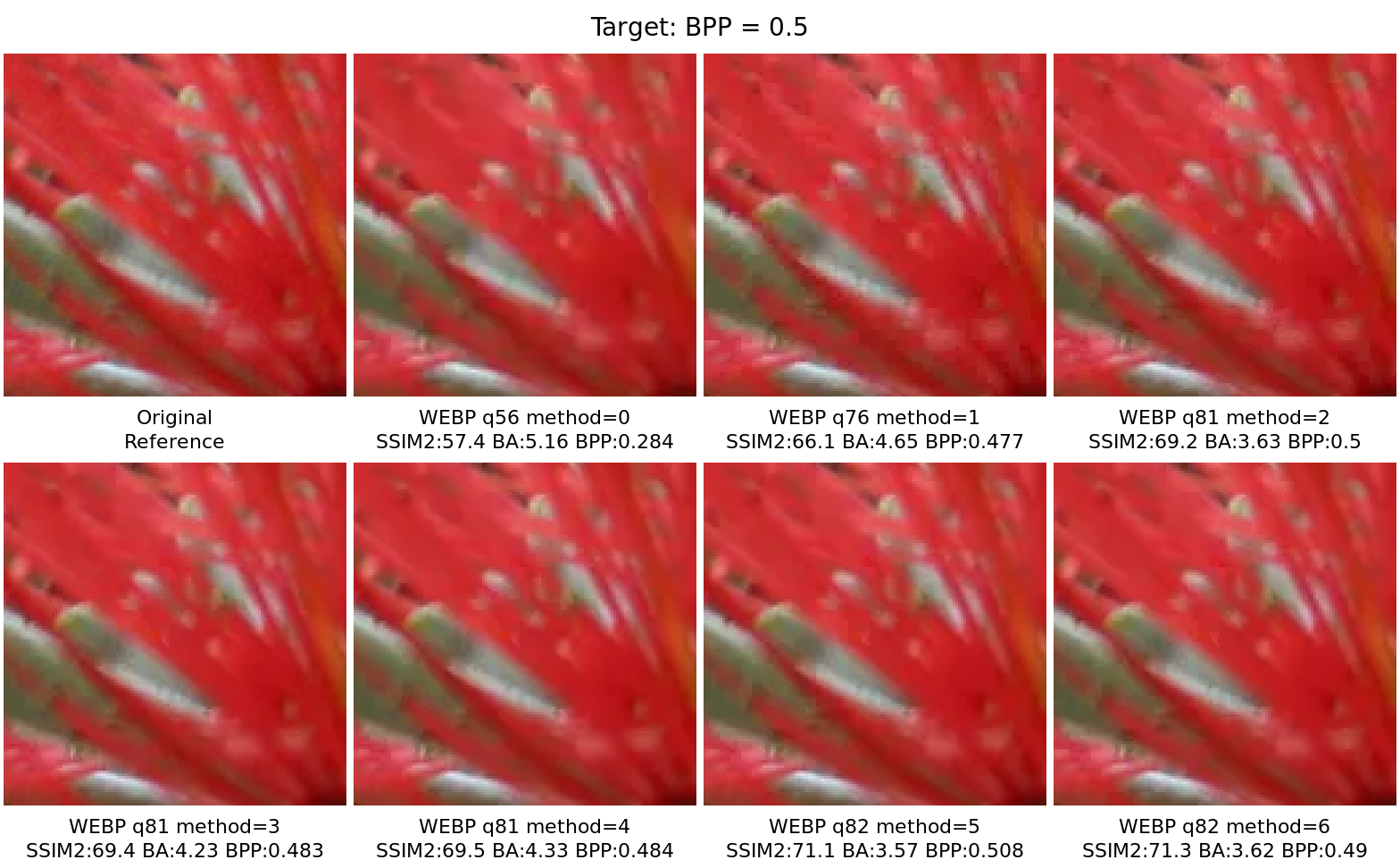
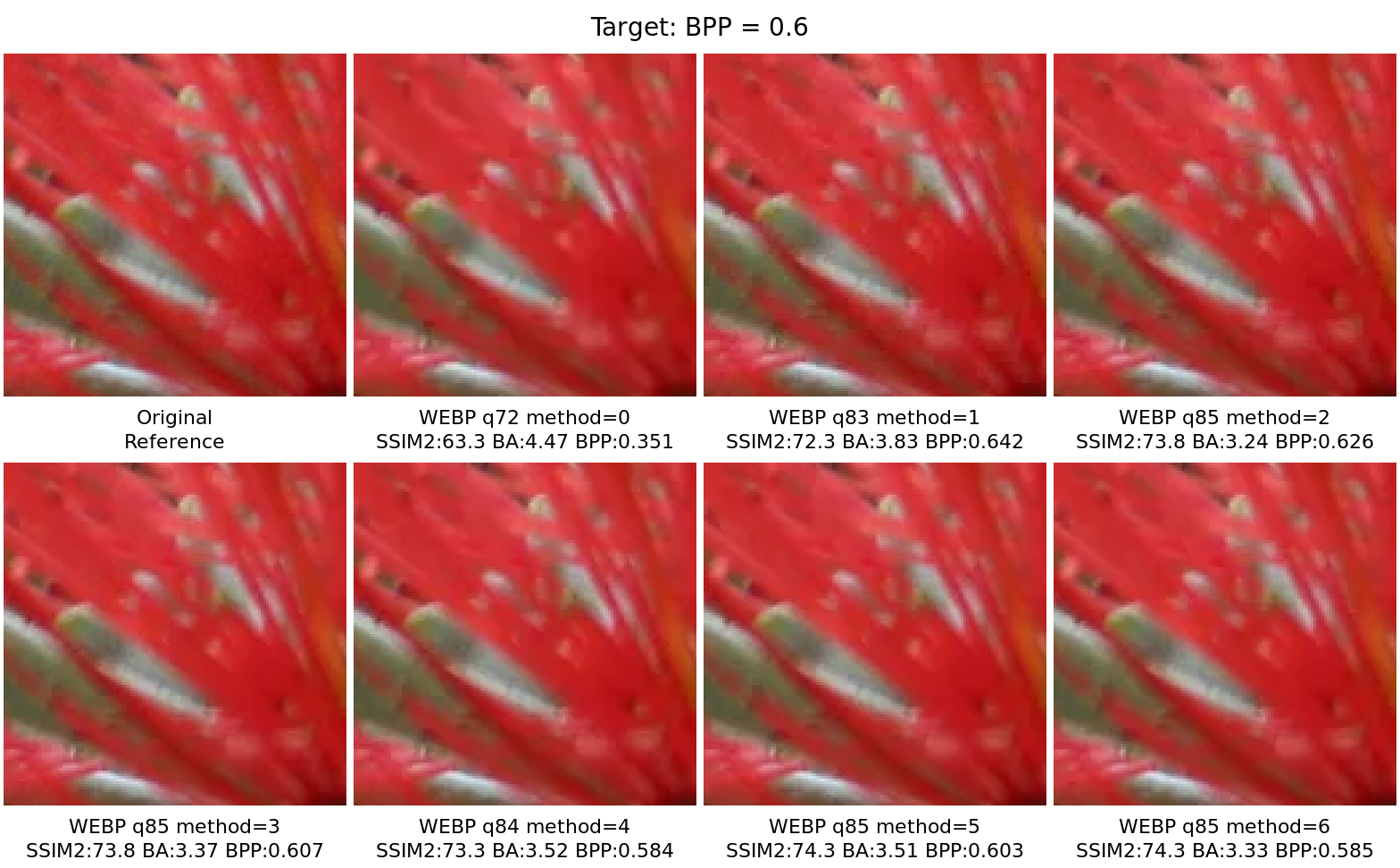
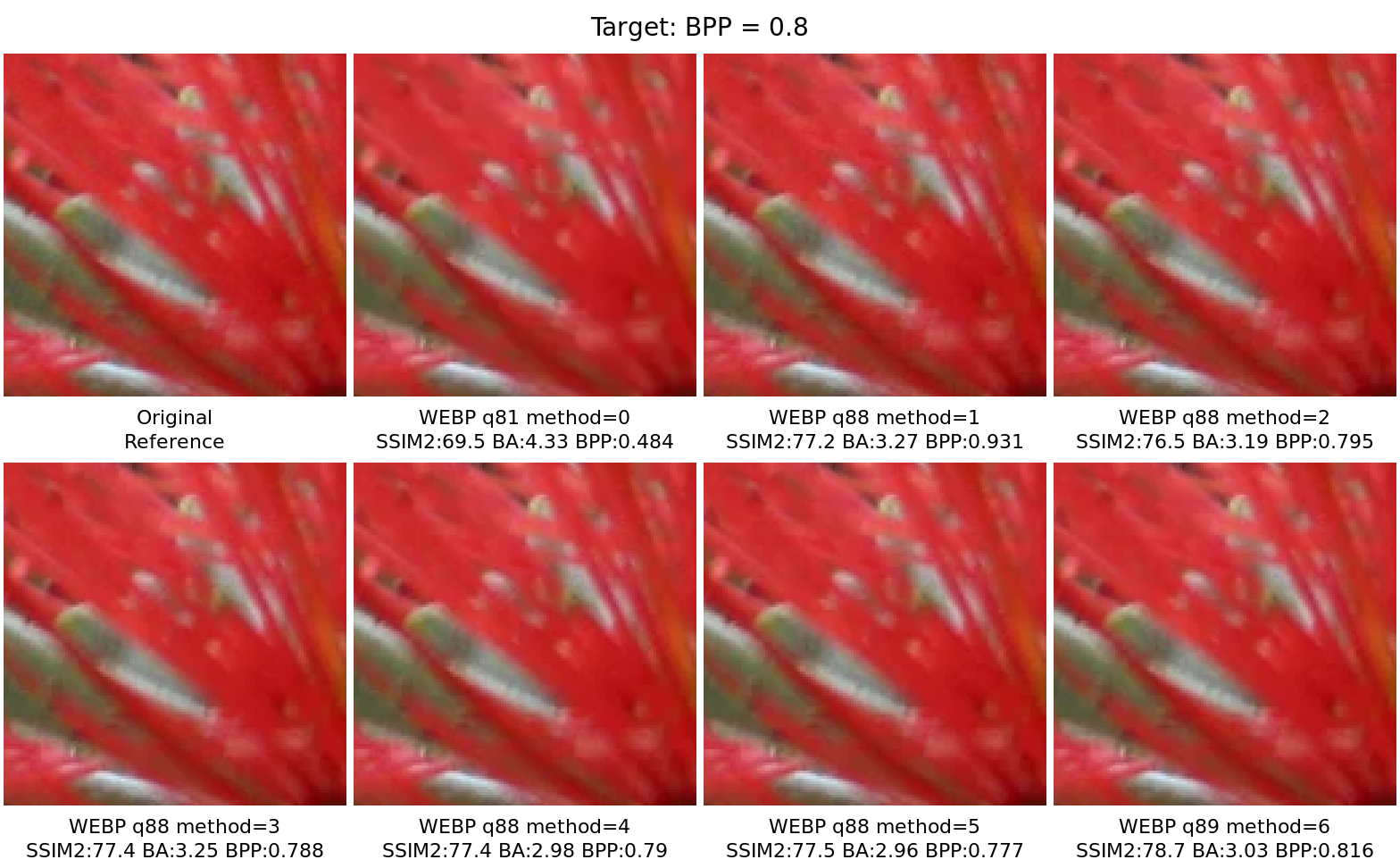
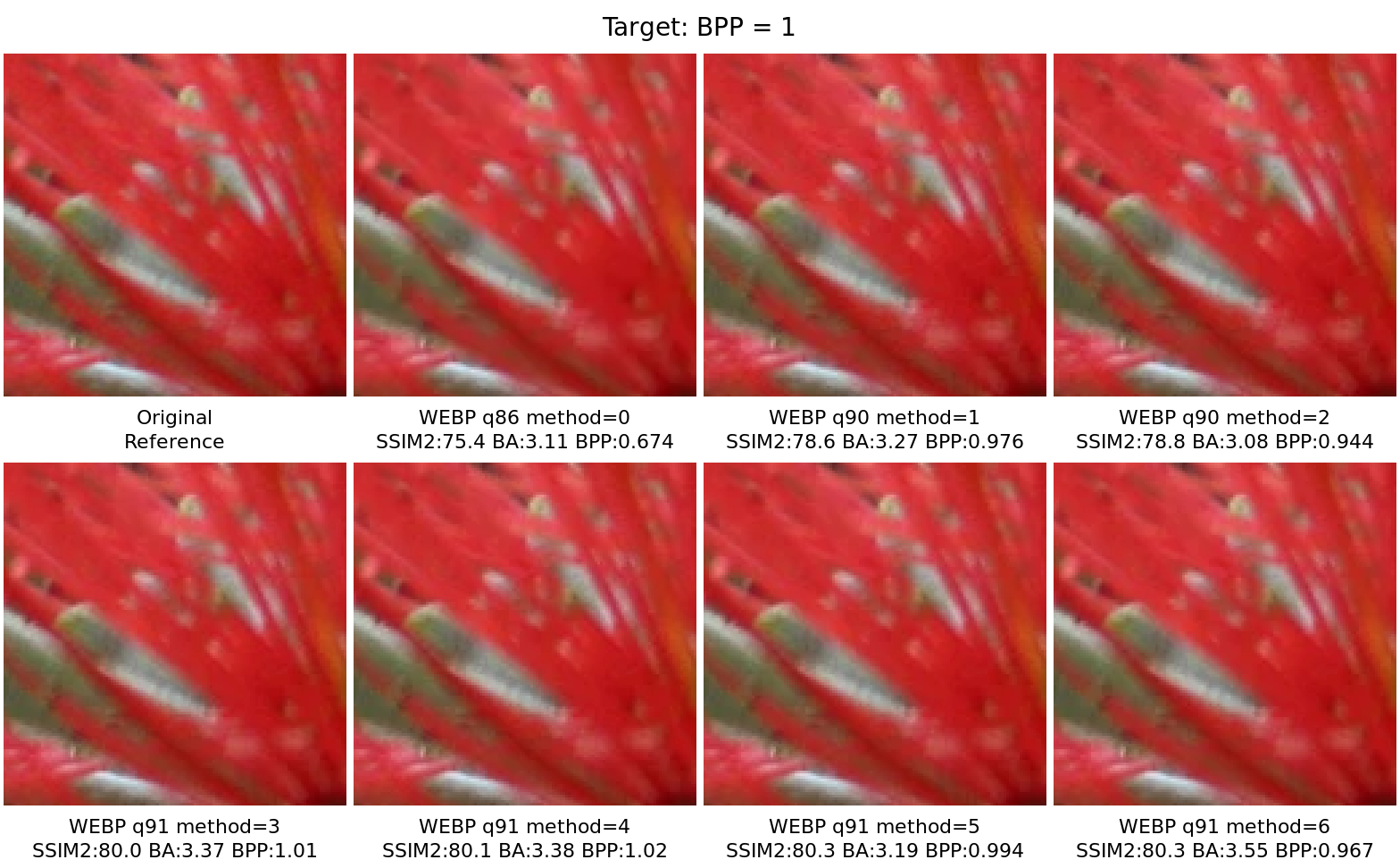
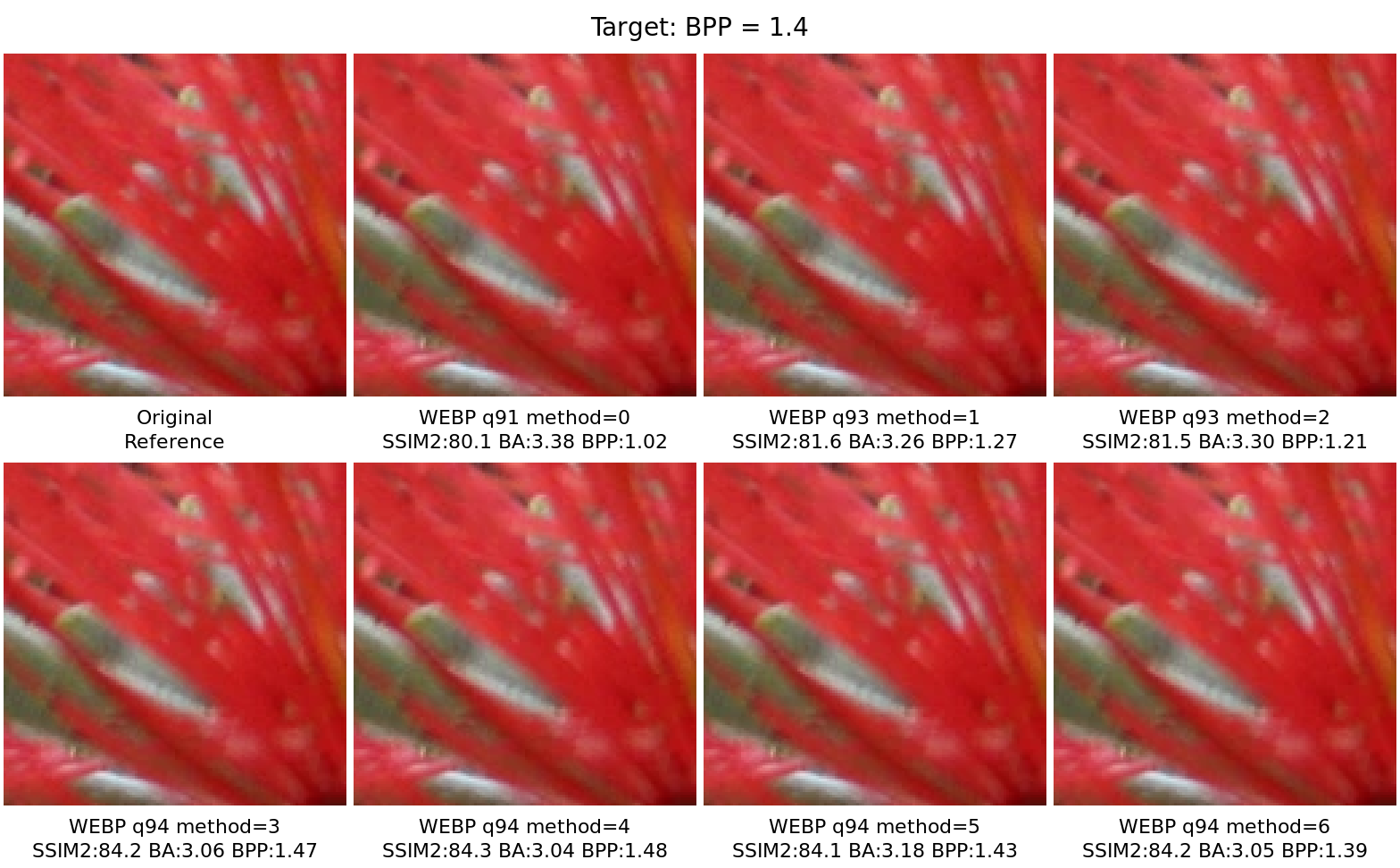
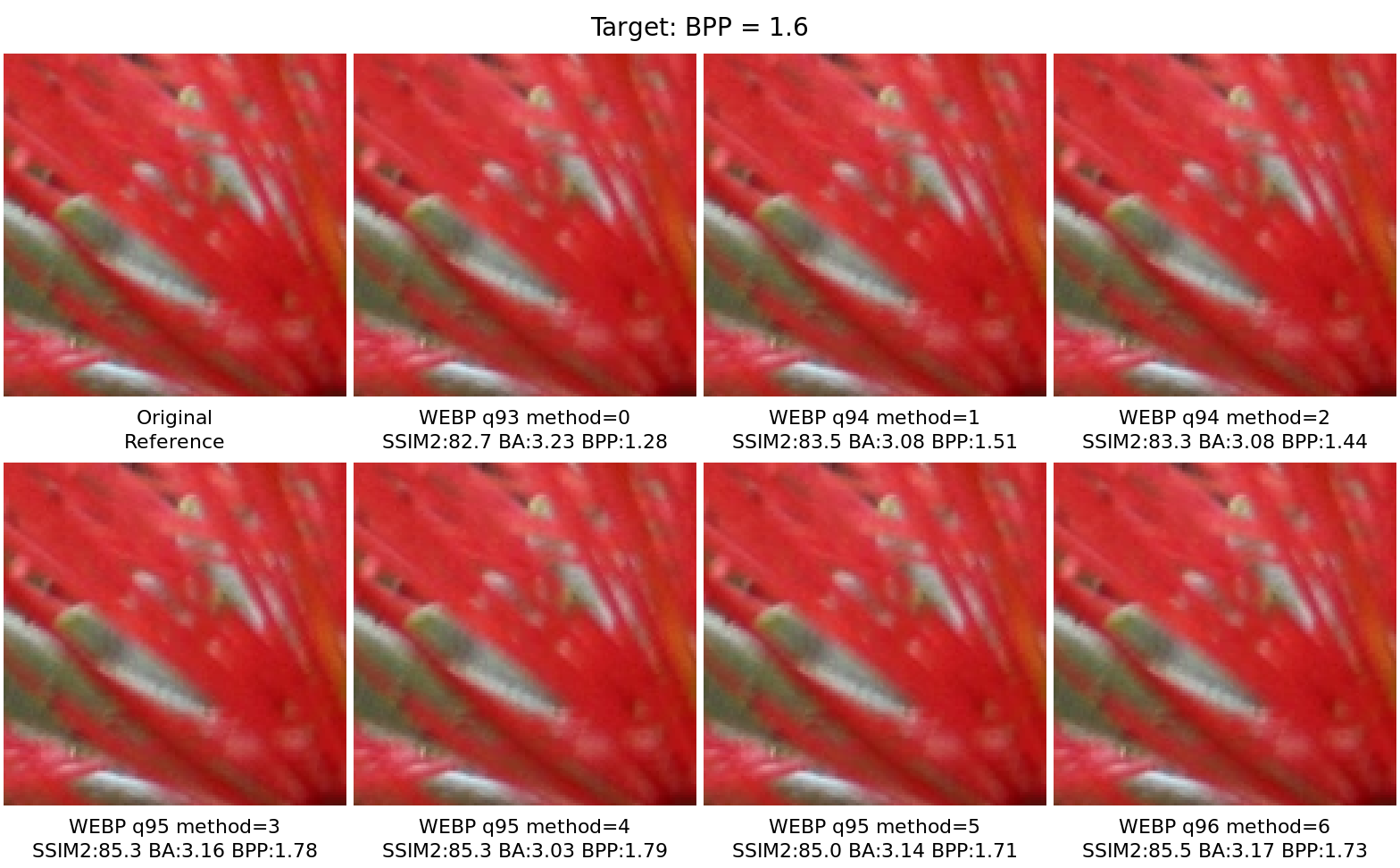
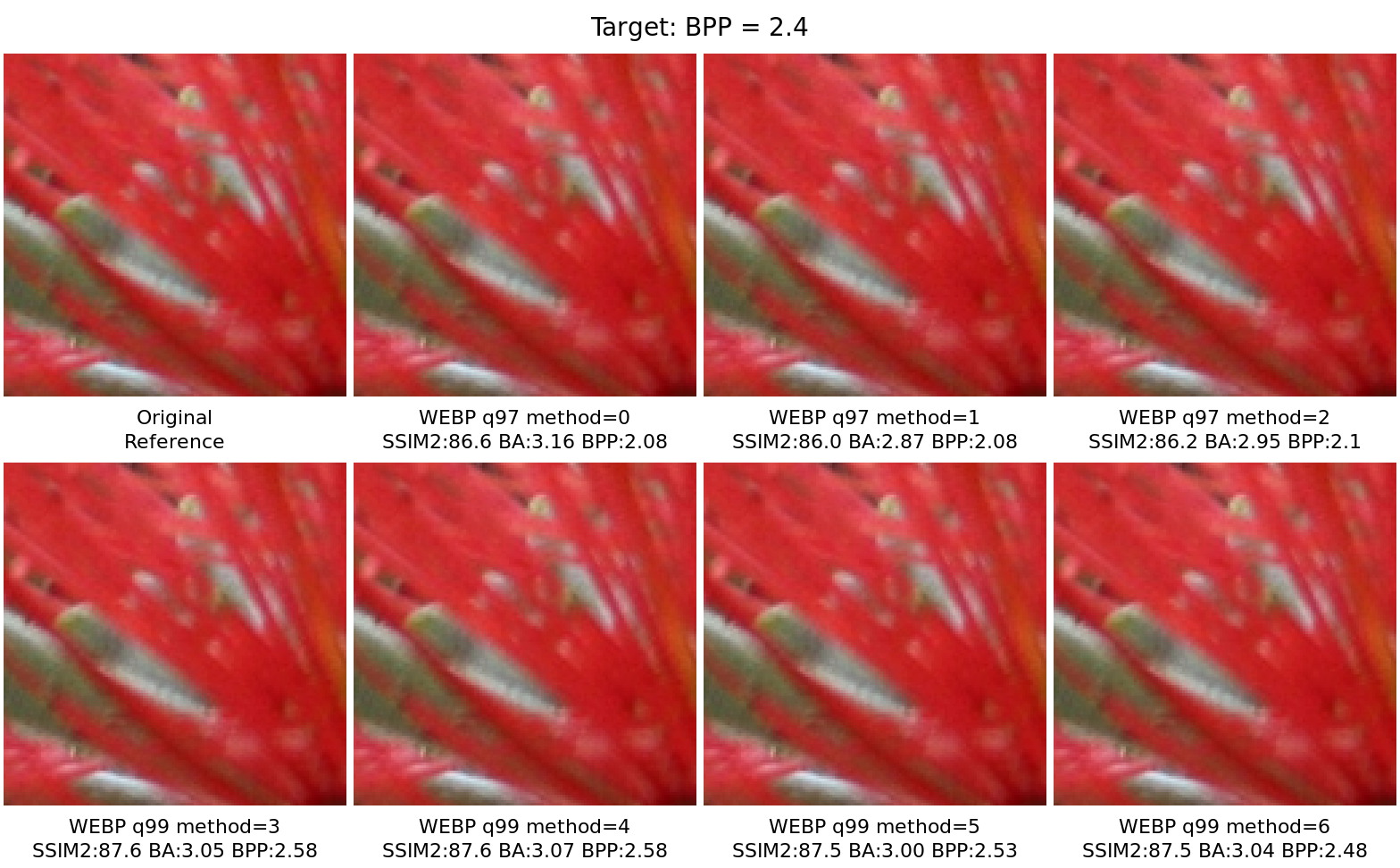
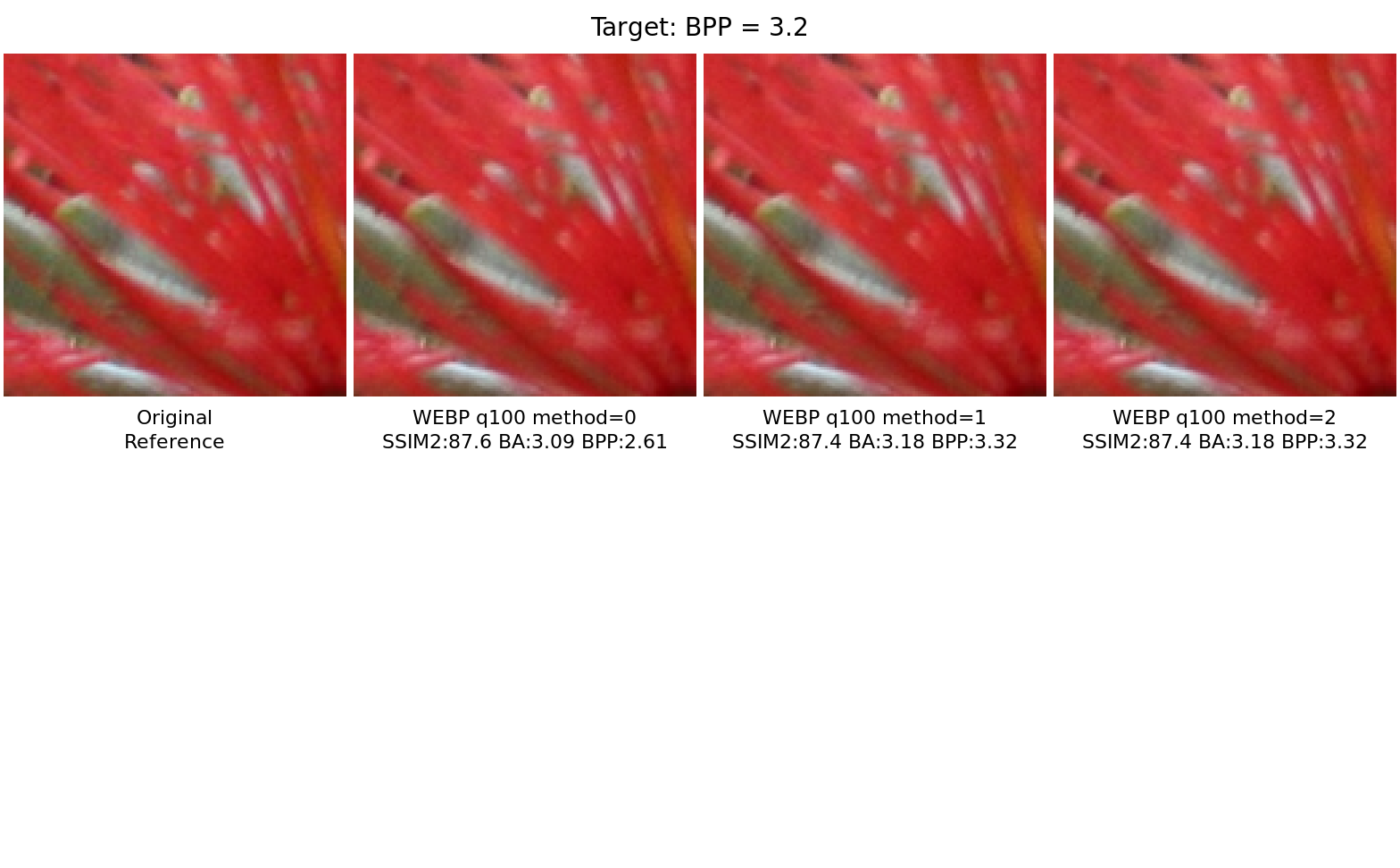
Distortion Map Comparison


Matched Butteraugli
Selected Image & Fragment Location

Anisotropic Distortion Map
Fragment Comparison
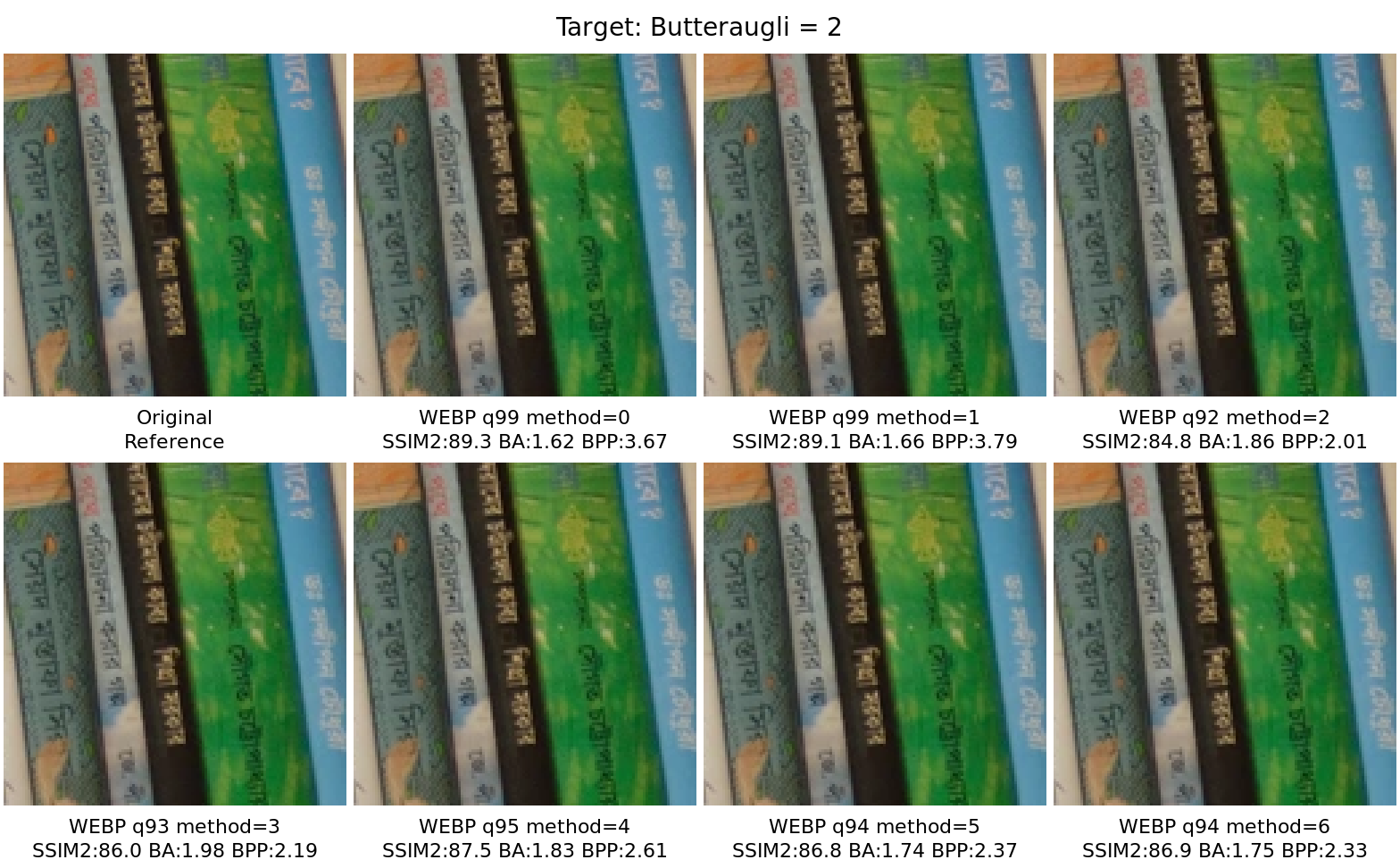
Distortion Map Comparison
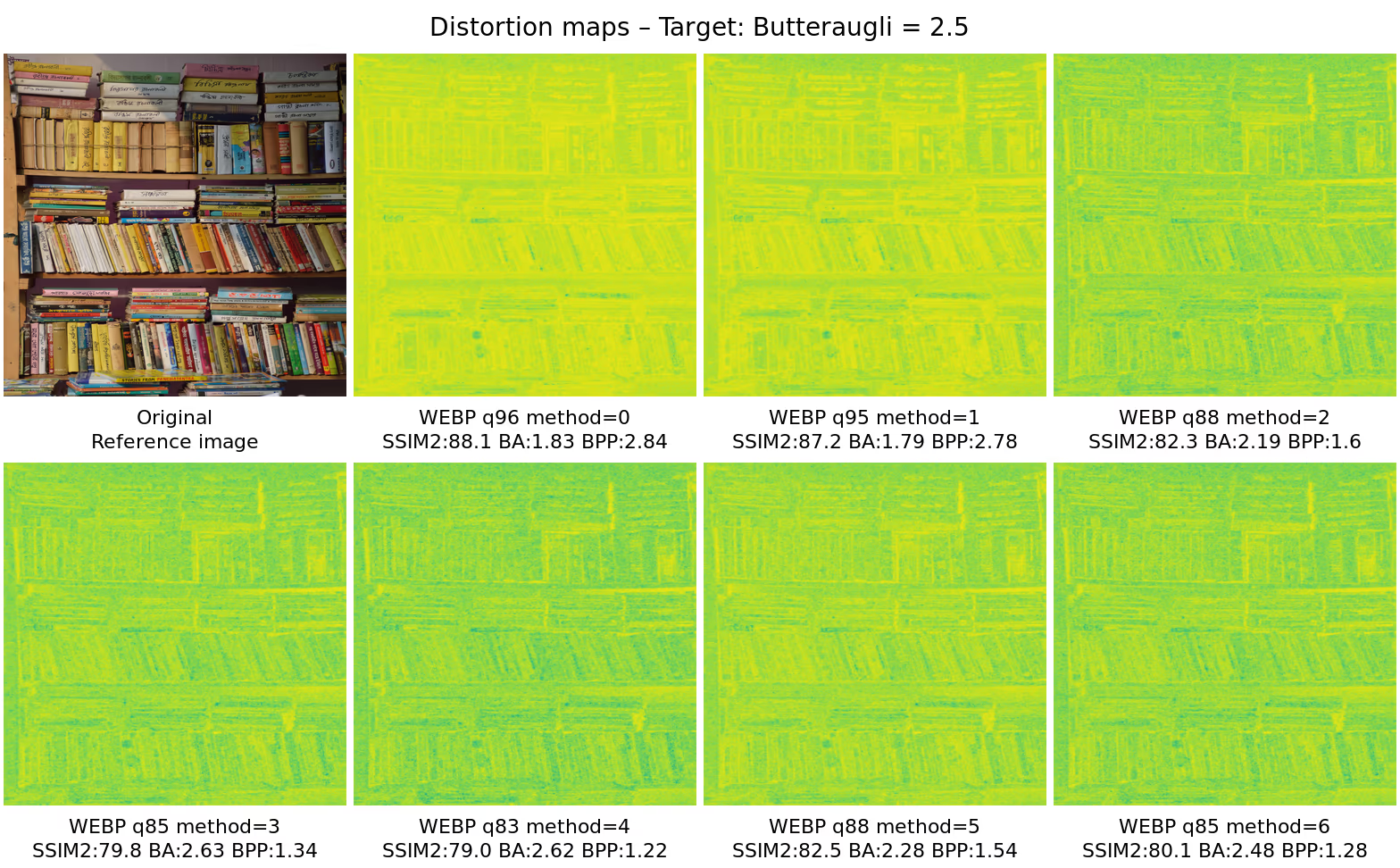
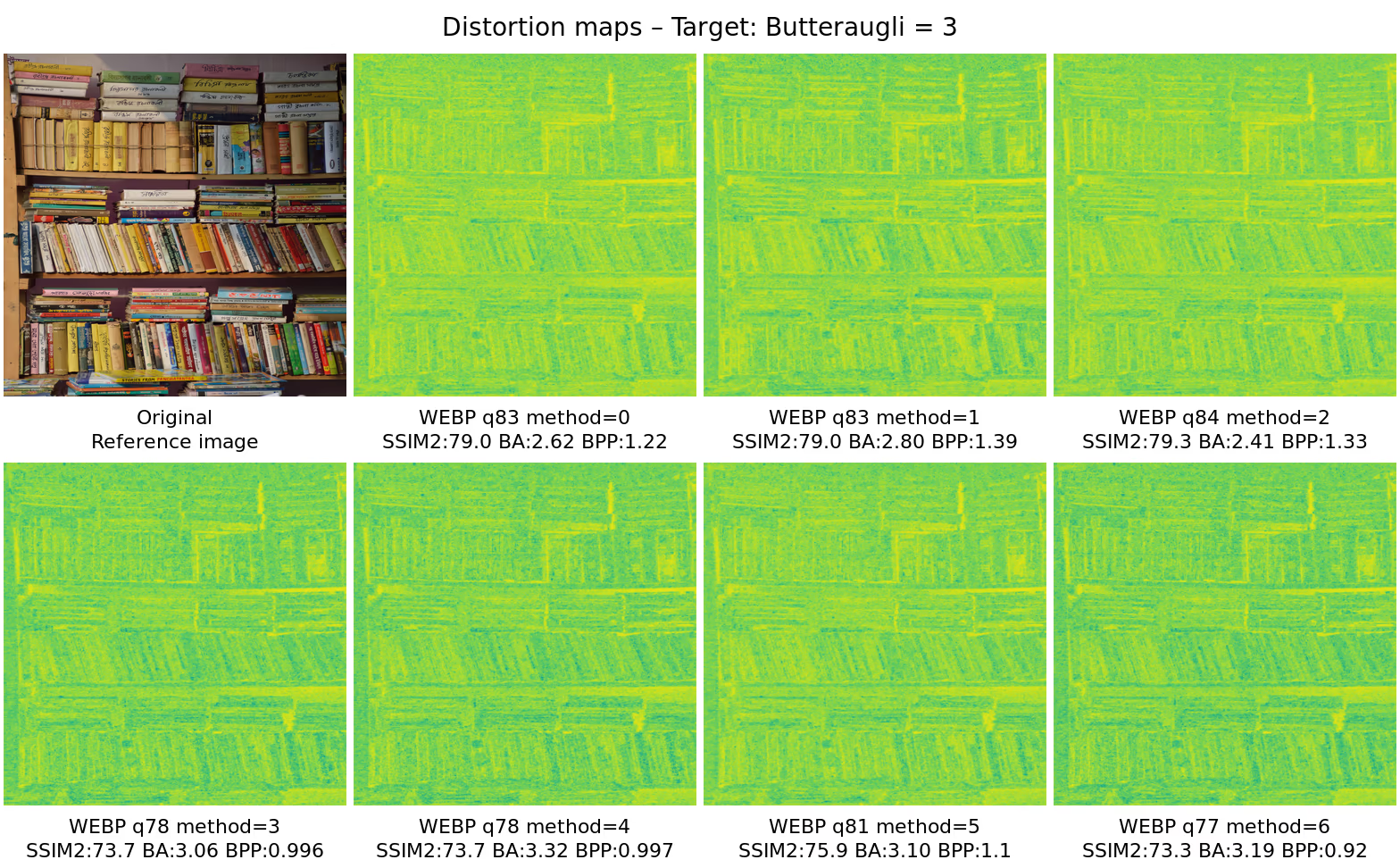
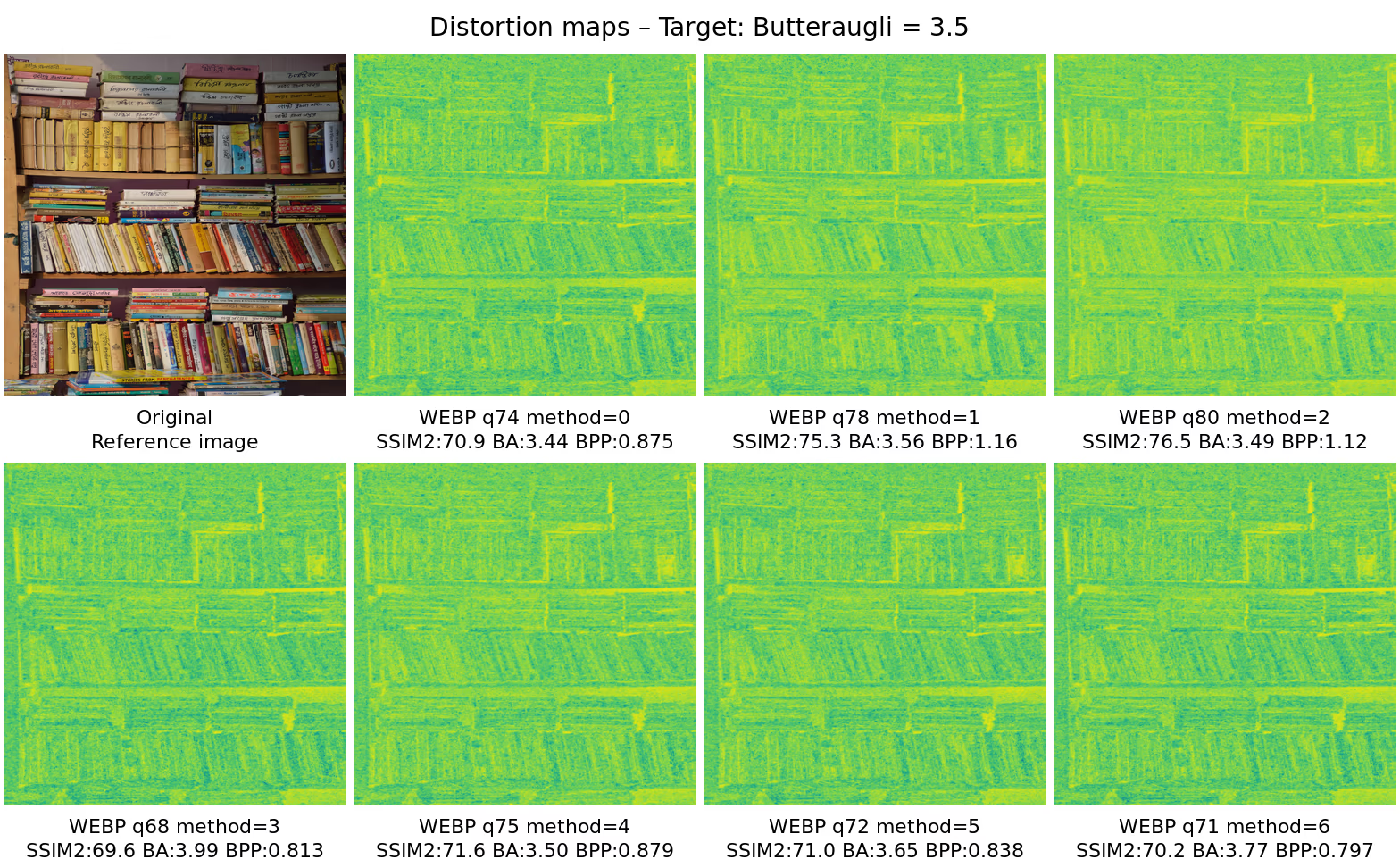
Matched Ssimulacra2
Selected Image & Fragment Location

Anisotropic Distortion Map
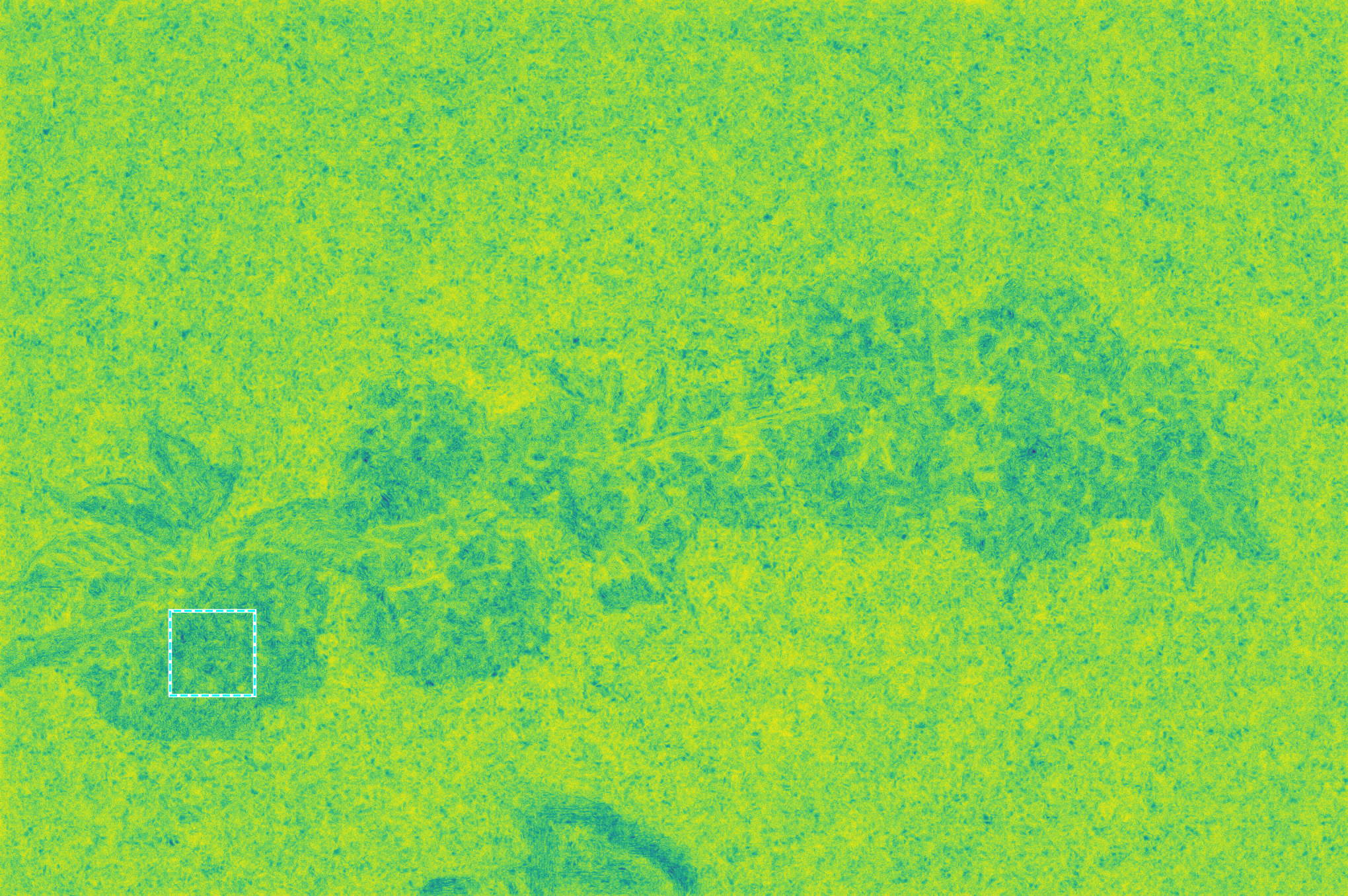
Fragment Comparison
Distortion Map Comparison
Static SVG Figures
Downloadable vector graphics for use in papers, presentations, or offline analysis.
- webp-method-sweep_bits_per_ssimulacra2_per_pixel_vs_method.svg
- webp-method-sweep_butteraugli_vs_method.svg
- webp-method-sweep_ssim_vs_bits_per_pixel.svg
- webp-method-sweep_psnr_vs_method.svg
- webp-method-sweep_ssimulacra2_vs_bits_per_pixel.svg
- webp-method-sweep_butteraugli_vs_bits_per_pixel.svg
- webp-method-sweep_bits_per_butteraugli_per_pixel_vs_method.svg
- webp-method-sweep_bits_per_psnr_per_pixel_vs_method.svg
- webp-method-sweep_bits_per_ssim_per_pixel_vs_method.svg
- webp-method-sweep_bits_per_pixel_vs_method.svg
- webp-method-sweep_encoding_time_per_pixel_vs_method.svg
- webp-method-sweep_psnr_vs_bits_per_pixel.svg
- webp-method-sweep_ssimulacra2_vs_method.svg
- webp-method-sweep_ssim_vs_method.svg